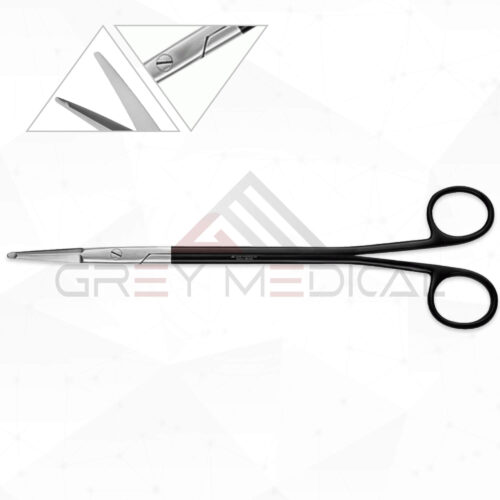
A broad spatula retractor is an important surgical instrument designed to gently hold and move soft tissues away from the operative field. Its broad, smooth blade provides a wider contact area, helping surgeons maintain clear visibility while reducing concentrated pressure on surrounding tissues. This design makes it useful in procedures where controlled and stable tissue retraction is essential. A high-quality spatula retractor can contribute to improved surgical access and efficient handling during different operative applications.
Design and Construction
The construction of a broad spatula retractor focuses on strength, durability, and smooth performance. It is commonly manufactured from surgical-grade stainless steel, allowing the instrument to withstand repeated cleaning, sterilization, and professional use. The broad blade is carefully shaped to provide consistent tissue support without sharp or irregular edges. The ergonomic design also allows surgeons and medical professionals to maintain steady control during procedures. GreyMedical®️ is a privately owned medical technology company dedicated to innovation and excellence in the craft of surgical instruments.
Surgical Applications
A broad spatula retractor can be used when tissues need to be gently displaced to expose deeper anatomical structures. Its wide blade makes it particularly suitable for situations requiring broad-area retraction rather than narrow tissue separation. Depending on the procedure and surgical specialty, the instrument may assist with maintaining exposure around muscles, soft tissues, and other anatomical structures. The practical design of a spatula retractor allows surgical teams to achieve controlled retraction while keeping the operative area accessible.
Benefits of Broad Blade Design
One of the main advantages of a broad spatula retractor is its ability to distribute retraction pressure across a larger surface. This can help provide stable tissue positioning while supporting better visualization of the surgical site. The smooth blade can also facilitate careful manipulation during procedures where gentle handling is important. Because the instrument offers a broad working surface, surgeons can select it when conventional narrow retractors may not provide sufficient coverage. A dependable forceps babcock tissue is therefore a valuable addition to a professional surgical instrument collection.
Quality and Sterilization
Medical instruments used in surgical environments must meet high standards for cleanliness, durability, and performance. A stainless-steel broad spatula retractor can be cleaned and sterilized according to appropriate institutional protocols, helping maintain its suitability for repeated clinical use. Proper inspection is also important to ensure that the blade remains smooth, secure, and free from damage. Choosing a well-manufactured spatula retractor can support consistent instrument performance throughout its service life.
Choosing the Right Surgical Instrument
Selecting the appropriate retractor depends on the procedure, surgical approach, anatomical area, and desired level of tissue exposure. A broad spatula design can be especially useful when surgeons require wider and controlled retraction. Its simple yet functional construction makes it suitable for professional operating environments where precision and reliability are priorities. For healthcare facilities and surgical professionals seeking dependable equipment, the right spatula retractor can provide practical support for effective operative exposure and tissue management.
Conclusion
The broad spatula retractor combines a wide working surface, durable construction, and controlled handling to support surgical procedures requiring dependable tissue retraction. Its design can help improve access and visibility while allowing careful positioning of surrounding tissues. With appropriate maintenance, cleaning, and sterilization, this instrument can remain a useful component of a comprehensive surgical instrument range. Selecting quality-manufactured retractors helps surgical professionals maintain reliable performance and efficiency in demanding clinical environments.