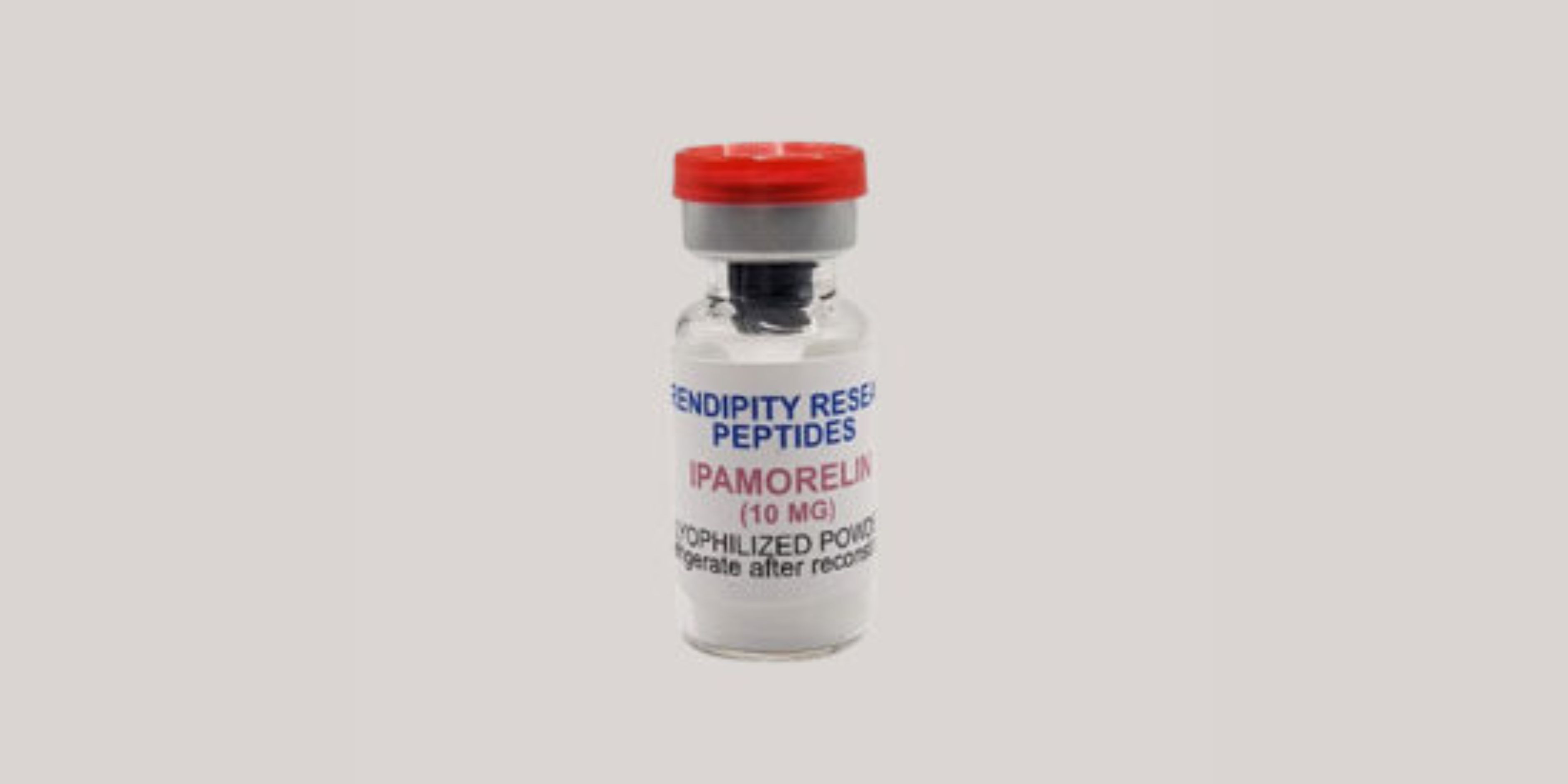
Research on growth hormone secretagogues has given biotechnology and pharmaceutical teams new ways to study how the body controls growth hormone (GH) release. Among these compounds, ipamorelin peptide has gained research interest for its strong and selective GH-releasing activity. Early studies found a clear effect on GH while showing little change in several other pituitary hormones.
How Does Ipamorelin Act as a Growth Hormone Secretagogue?
Ipamorelin is a synthetic pentapeptide designed to act on the growth hormone secretagogue receptor, known as GHS-R1a. This receptor belongs to the G protein-coupled receptor family. Ghrelin is the natural ligand for this receptor, while synthetic secretagogues can activate the same signaling system.
Early laboratory research compared ipamorelin with well-studied compounds such as GHRP-6. In rat pituitary cells, ipamorelin produced strong GH release with potency close to GHRP-6. These findings helped establish peptide ipamorelin as a useful compound for studying GHS receptor activity.
What Makes Ipamorelin Selective?
Selectivity is a key part of the research interest around ipamorelin. Researchers examined whether the compound affected hormones beyond GH. In swine studies, ipamorelin did not produce significant changes in FSH, LH, prolactin, or TSH. It also showed a distinct hormonal profile for ACTH and cortisol compared with GHRP-6 and GHRP-2.
The findings can be summarized through three important research observations:
- Strong GH activity: Ipamorelin produced a marked GH response in cell and animal models.
- GHS receptor action: Pharmacological testing linked its GH effect to a GHRP-like receptor pathway.
- Hormonal selectivity: Studies found little change in several other pituitary hormones during testing.
For research facilities, this profile can help when studying receptor pharmacology, pituitary signaling, and selective hormone release.
What Have Human Pharmacology Studies Shown?
Human pharmacokinetic and pharmacodynamic research has also examined ipamorelin peptide. One study found dose-related exposure and described a short terminal half-life of about two hours.
GH stimulation reached its peak at about 0.67 hours, followed by a decline toward baseline levels. Researchers also developed a pharmacodynamic model to describe the relationship between ipamorelin concentrations and GH release.
Such findings can help clinical laboratories and drug development teams study exposure, response patterns, sampling times, and biological activity. They also provide useful data for designing future pharmacology studies involving the peptide ipamorelin.
Why Does Selective Activity Matter for Research?
Selective GH secretagogue activity gives researchers a clearer model for studying the GH axis. It allows teams to examine how receptor activation influences GH secretion while tracking related hormonal signals.
For pharmaceutical and biotechnology research, ipamorelin can therefore serve as a useful reference compound in studies involving GHS receptor biology, pituitary function, peptide structure, and hormone-release pathways.
Final Thought
Ipamorelin studies reveal a peptide with strong GH-releasing activity and a distinct degree of hormonal selectivity. Early cell, animal, and human pharmacology research provides a useful foundation for understanding its receptor activity and GH response. For universities, clinical laboratories, pharmaceutical firms, and biotechnology companies, these findings offer valuable data for continued research into selective growth hormone secretagogues.