What homeowners should know before a simple rinse becomes another maintenance problem.
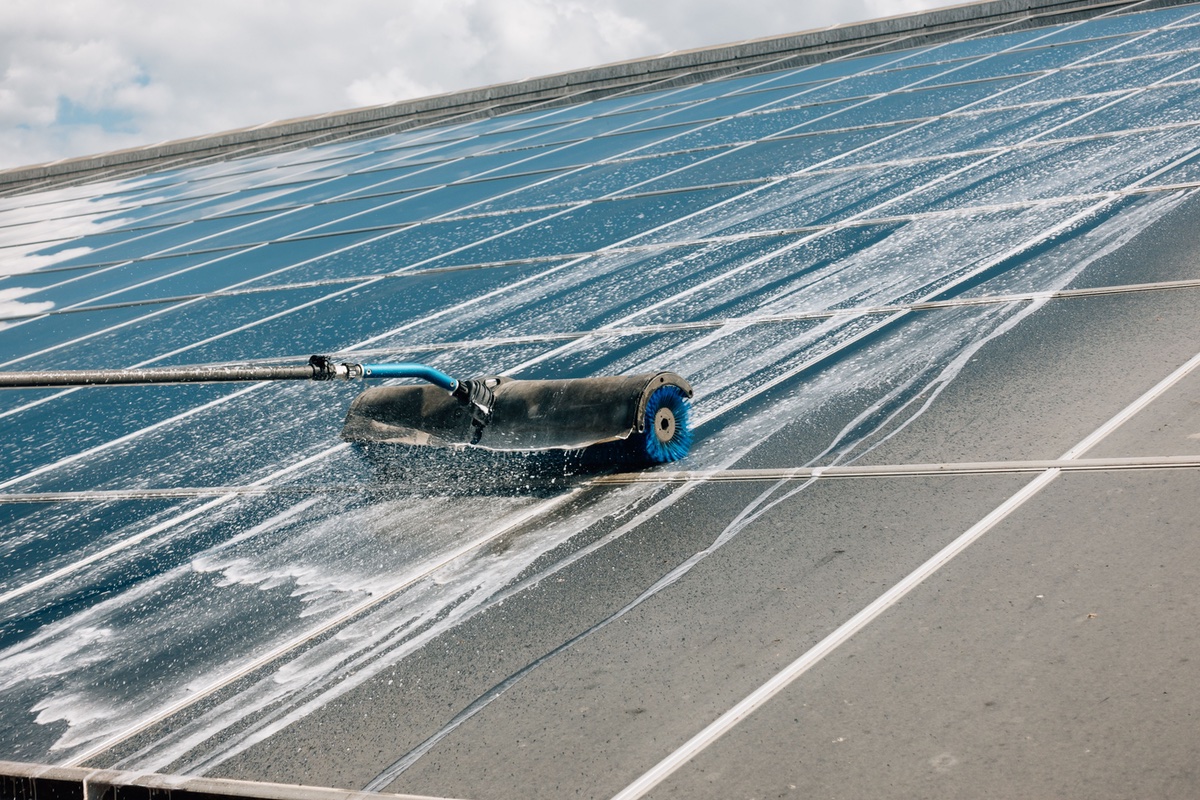
A homeowner rinses a dusty rooftop array on a bright afternoon. At first, the job looks successful. The dust is gone, sunlight flashes across the glass, and the panels look noticeably better.
The next morning tells a different story.
Pale rings have dried across several modules, and a few stubborn marks remain. The homeowner starts wondering whether the problem was the technique, the water, or both.
That is the real question behind deionized water for solar panels.
Water seems harmless, but not all water behaves the same after it evaporates. Hard water contains dissolved calcium and magnesium, and the U.S. Geological Survey notes that it can leave film or spots on glass.
Deionized water has had many dissolved ions removed, leaving less mineral content available to remain on the surface. USGS describes it as a form of very pure water, although even highly purified water can still contain some ions.
So, is it safe? Generally, yes, when it is part of a careful cleaning process that follows the panel manufacturer’s instructions. Pure water alone does not make every cleaning method safe.
Key Takeaways
- Deionized water for solar panels can help reduce mineral residue after rinsing.
- Safe solar panel cleaning also depends on soft tools, panel temperature, condition, and roof safety.
- DI water cannot fix every old mineral stain, scratch, crack, or access problem.
Why Water Quality Matters
Direct answer: What is dissolved in cleaning water can remain after the water itself evaporates.
Think about a drinking glass that dries with cloudy marks. The water is gone, but its minerals are not. Solar glass can face the same basic issue.
USGS defines water hardness largely by dissolved calcium and magnesium and explains that hard water can leave visible film and spots on glass.
That does not mean tap water automatically harms every array. Water chemistry varies by location. It does mean a hose rinse should not automatically be assumed to dry cleanly, especially where sprinkler overspray, well water, or recurring white spots are already present.
How Does DI Water Help?
Deionization removes charged particles, or ions, from water. In practical terms, fewer dissolved minerals means less material is available to remain on solar glass as the rinse dries.
That is the main reason deionized water for solar panels fits a low-residue cleaning process. For many properties, deionized water for solar panels is less about making the wash more complicated and more about avoiding unnecessary mineral residue.
Still, “DI” is not a magic label. Water purity depends on the treatment system, while the condition of brushes and cleaning equipment matters just as much.
A current PV-module cleaning manual from a major manufacturer recommends low-mineral water for wet cleaning, gentle non-abrasive tools, and avoiding the hottest part of the day. It also warns against scraping dry dirt from the glass.
The lesson is simple: water quality and technique have to work together.
Is Deionized Water Safe for Solar Panels?
Direct answer: In a properly controlled process, deionized water for solar panels is a sensible low-mineral option. The method should still follow the cleaning guidance for the specific modules installed.
Solar panels are not ordinary windows. They are electrical equipment exposed to heat, weather, wiring, connectors, seals, and rooftop conditions. Cracked or damaged modules can also create additional risk when wet. Manufacturer guidance recommends inspecting modules before cleaning and treating damaged panels cautiously.
Before cleaning, ask:
- Are the panels cool enough to clean?
- Are there cracks or visibly damaged areas?
- Are the brushes soft and non-abrasive?
- Is the roof safe to access?
- Does the module manufacturer allow the planned method?
The CLEAN Check Before Any Wash
This five-part framework keeps the process practical.
- Check the glass. Identify dust, droppings, pollen, mineral marks, and visible damage.
- Learn the water. If local water is hard, consider a low-mineral rinse.
- Ease the contact. Use soft, non-abrasive tools instead of aggressive scrubbing.
- Avoid peak heat. Manufacturer guidance recommends avoiding the hottest hours to reduce thermal stress.
- Never ignore access. A simple clean can still be unsafe on a steep, high, or fragile roof.
This is where a professional solar cleaning service can add value. The goal is not merely to rinse glass, but to match the method to the equipment, contamination, water conditions, and access.
Tap Water or DI Water?
| Factor | Tap Water | Deionized Water | What Matters Most |
| Dissolved minerals | Varies by location | Much lower by design | Local water quality |
| Drying residue | Can spot where water is hard | Lower mineral-residue risk | Actual rinse purity |
| Loose dirt | Can rinse it | Can rinse it | Contact method |
| Old mineral stains | May remain | May remain | Stain condition |
| Panel safety | Technique dependent | Technique dependent | Manufacturer guidance |
Deionized water for solar panels improves the quality of the rinse. It does not replace the basic rules of solar maintenance.
Why Clean Glass Still Matters
A clean array is not simply about appearance. Dust and other surface buildup can reduce the amount of sunlight reaching the cells and gradually affect power production.
A 2021 field experiment published in the European Journal of Science and Technology monitored photovoltaic panels under Mediterranean conditions. The panel group that went eight weeks without cleaning showed about a 33% power loss by the end of that interval. The researchers used deionized water and specialized brushes during cleaning.
That result should not be treated as a prediction for every home. The study involved a particular site, climate, cleaning interval, and level of accumulated contamination. It does, however, show why allowing dirt to build unchecked can matter and why cleaning frequency should follow actual site conditions rather than guesswork.
For homeowners, the takeaway is straightforward. Deionized water for solar panels can be part of a careful maintenance process that removes buildup without leaving the scale or salt residue associated with mineral-containing rinse water.
What Can DI Water Not Fix?
Deionized water for solar panels can help avoid adding fresh mineral residue during rinsing. It cannot reverse every existing surface problem.
Older hard-water deposits may have gone through repeated wet-dry cycles. Bird droppings can harden. Sap, lichen, or other contamination may require more than a rinse. Scratches, cracks, damaged coatings, and electrical faults are not cleaning problems.
Pure water also does not eliminate the need for appropriate physical cleaning. Some contamination still needs gentle agitation with a suitable soft tool.
Professional residential solar cleaning becomes useful when the buildup is difficult to identify, the roof is unsafe, or previous DIY attempts keep leaving spots behind.
Five Mistakes That Cause More Trouble
- Cleaning hot panels at midday. Manufacturer guidance recommends avoiding the hottest hours.
- Scrubbing dry dirt. Dry particles can be abrasive, and manufacturer guidance warns against rubbing them away dry.
- Assuming more force means a better clean. Aggressive methods can create unnecessary risk.
- Using household chemicals without checking guidance. A product that works on ordinary glass may not be suitable for a PV module.
- Treating every white mark as dust. Mineral deposits behave differently from loose surface dirt.
The best solar panel cleaning method removes contamination without creating another maintenance problem.
Good Cleaning Starts Before the Brush
Solar maintenance works better when the process is considered before anyone starts rinsing or scrubbing. Water quality, panel temperature, cleaning tools, roof access, and the condition of the array all deserve attention first.
As Dwight D. Eisenhower once said, “Plans are worthless, but planning is everything.” The Eisenhower Presidential Library traces the line to his remarks at the National Defense Executive Reserve Conference on November 14, 1957.
That principle translates naturally to solar care. A thoughtful cleaning plan can help avoid preventable problems such as mineral residue, harsh surface contact, or choosing poor conditions for rooftop work. Deionized water for solar panels is most valuable when it is one part of that careful overall approach.
The Clear Answer on DI Water
So, is deionized water for solar panels safe?
Used correctly, it is a practical low-mineral choice because it reduces the dissolved mineral load in rinse water. That can help limit the spots and film associated with hard water.
But safe cleaning still depends on appropriate tools, sensible timing, visible-condition checks, roof safety, and the manufacturer’s instructions.
Clean solar glass is not about making a roof shine for a photograph. It is about caring for the light-collecting surface without taking unnecessary risks with the system underneath it.
When the Roof Needs a Specialist
For homeowners and property teams who want a maintenance-focused approach to deionized water for solar panels, Mr Clean Solar Cleaning can help keep solar arrays properly cared for without turning routine maintenance into guesswork.
FAQs
Is deionized water better for solar panel cleaning?
It can be especially useful where tap water contains more dissolved minerals. Deionized water for solar panels leaves less mineral material available to remain after the rinse dries.
What are the best solar cleaning practices?
Follow the module manufacturer’s guidance, use soft non-abrasive tools, choose low-mineral water when appropriate, avoid very hot panels, and inspect for visible damage first.
When should I hire a professional solar cleaning service?
Consider professional help when roof access is unsafe, stains are stubborn, contamination keeps returning, or the property needs consistent maintenance rather than an occasional rinse.
What does professional solar panel cleaning cost?
Cost varies with array size, roof access, panel layout, contamination, location, and service frequency. A site-specific estimate is more meaningful than a generic price.
Does Mr Clean Solar Cleaning use deionized water?
Yes. Mr Clean Solar Cleaning describes its process as using deionized water with soft-bristle cleaning tools.
Does Mr Clean Solar Cleaning serve commercial sites?
Yes. Mr Clean Solar Cleaning offers residential cleaning and scheduled commercial solar-maintenance programs for properties such as warehouses, schools, solar farms, and multi-site portfolios.