Communication is one of the most essential life skills a child can develop. For children facing developmental challenges, especially those on the autism spectrum, building strong communication abilities can be a gradual journey that requires structured support. This is where Applied Behavior Analysis (ABA) therapy plays a transformative role. In this article, we’ll explore how ABA therapy helps communication, the importance of child assessment and ABA plan, and how families can access services like ABA therapy booking near me to experience truly above and beyond therapy outcomes.
Understanding Communication Challenges in Children
Many children with developmental delays struggle with expressing their needs, understanding language, or engaging socially. These challenges can lead to frustration, behavioral issues, and difficulty forming relationships. Early intervention is key and ABA therapy is widely recognized as one of the most effective approaches to improving communication skills.
1. Individualized Learning Through Child Assessment and ABA Plan
A strong foundation of ABA therapy begins with a detailed child assessment and ABA plan. Each child is unique, and ABA professionals carefully evaluate communication abilities, behavior patterns, and learning styles before creating a personalized plan.
This individualized approach ensures that therapy targets specific communication barriers, whether verbal or non-verbal. With clear goals and measurable outcomes, children receive focused support tailored to their needs.
2. Encouraging Verbal Communication
One of the most impactful ways how ABA therapy helps communication is by encouraging speech development. Therapists use positive reinforcement techniques to motivate children to use words, sounds, or phrases.
Even small steps like making eye contact or attempting a sound are rewarded, helping children gradually build confidence and verbal skills.
3. Supporting Non-Verbal Communication
Not all children communicate verbally, and ABA therapy recognizes this. It introduces alternative communication methods such as gestures, sign language, or picture exchange systems.
These tools empower children to express their needs effectively, reducing frustration and enhancing independence. This is another key example of how ABA therapy helps communication in diverse ways.
4. Improving Social Interaction Skills
Communication is more than just speaking it’s also about interaction. ABA therapy helps children learn essential social skills such as taking turns, maintaining eye contact, and understanding social cues.
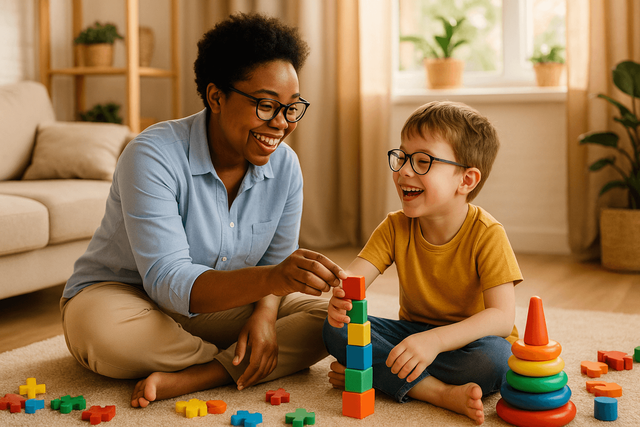
Through structured play and guided interactions, children begin to engage more meaningfully with others, improving both communication and relationships.
5. Breaking Down Complex Skills into Simple Steps
ABA therapy uses a method called task analysis, where complex communication skills are broken into smaller, manageable steps. For example, learning to ask for help may involve:
- Recognizing the need
- Making eye contact
- Using a word or gesture
- Waiting for a response
This step-by-step process makes learning easier and more achievable, showing clearly how ABA therapy helps communication development over time.
6. Reinforcing Positive Communication Behaviors
Positive reinforcement is at the heart of ABA therapy. When a child successfully communicates whether through words, gestures, or expressions they are rewarded with praise or a preferred activity.
This encourages repetition of positive behaviors, gradually strengthening communication habits. Families seeking consistent progress often look for ABA therapy booking near me to access such structured support.
7. Generalizing Communication Skills in Real-Life Situations
A crucial goal of ABA therapy is to ensure that communication skills are not limited to therapy sessions. Children are taught to apply these skills at home, school, and in social environments.
Therapists work closely with parents and caregivers to reinforce learning in everyday situations, delivering truly above-and-beyond therapy that extends beyond clinical settings.
Why Early Intervention Matters
The earlier a child receives ABA therapy, the better the outcomes. Early intervention allows therapists to address communication challenges during critical developmental stages, leading to long-term improvements in language, behavior, and social skills.
Parents searching for ABA therapy booking near me often find that starting early significantly enhances their child’s progress.
Choosing the Right ABA Therapy Provider
When selecting a therapy provider, it’s important to look for:
- Certified and experienced therapists
- Comprehensive child assessment and ABA plan
- Family involvement and training
- A personalized, compassionate approach
A provider that offers above and beyond therapy will focus not just on skill development, but also on building confidence and independence in children.
Final Thoughts
Understanding how ABA therapy helps communication can empower parents to make informed decisions about their child’s development. From personalized assessments to real-world application of skills, ABA therapy offers a structured, proven pathway to improving communication abilities.
If you’re considering support for your child, exploring ABA therapy booking near me can be the first step toward meaningful progress. With the right guidance and a well-designed child assessment and ABA plan, children can achieve remarkable growth experiencing truly above and beyond therapy that transforms their ability to connect with the world.