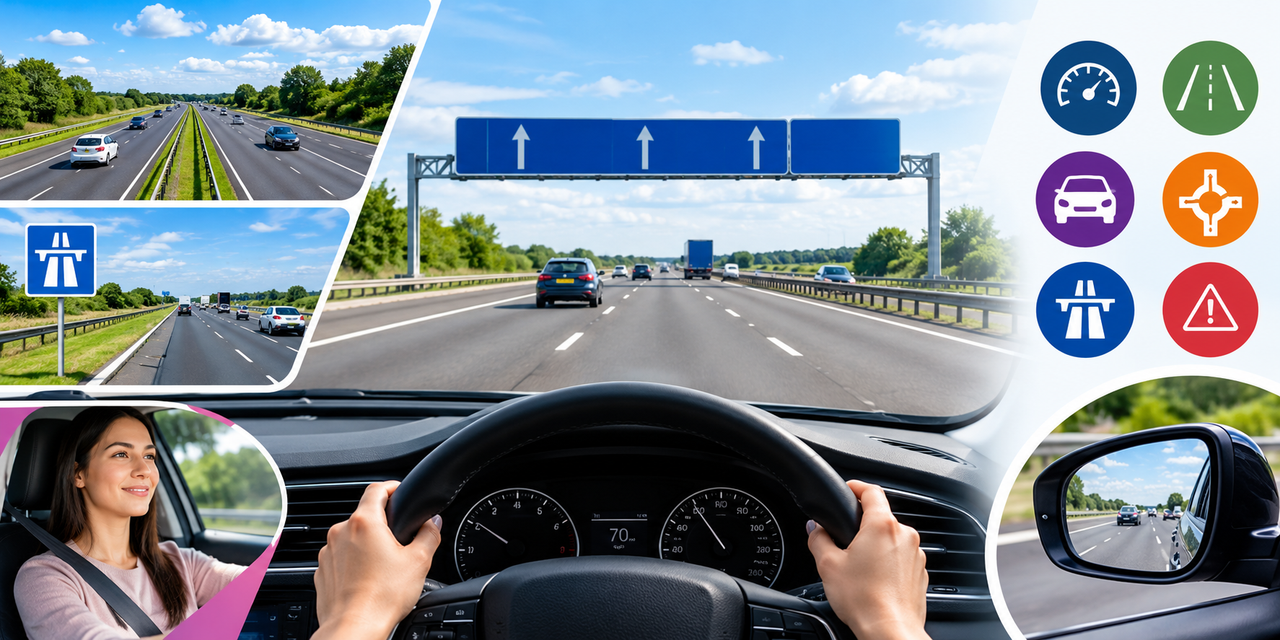
A motorway feels like a different planet the first time you join one, with cars streaming past at speeds your driving test never quite prepared you for. Dual carriageways can feel just as challenging, with similar speeds but different layouts, junctions and lane arrangements. Yet underneath that speed sits a set of rules that, once learned, turn fast roads into the easiest part of any journey.
This dual carriageway and motorway driving guide for new drivers breaks the confusion into plain steps, covering joining, lane use and the key differences between motorways and dual carriageways. Get these basics right, and high-speed roads stop feeling frightening and start feeling routine.
What Are Motorways and Dual Carriageways?
A motorway is a high-speed road designed for long-distance travel, with separate carriageways for each direction and controlled access through slip roads. Motorways generally have blue signs and may include a hard shoulder or emergency areas.
A dual carriageway has two separate carriageways divided by a central reservation, with traffic travelling in opposite directions kept apart. Unlike motorways, dual carriageways can include roundabouts, traffic lights, property access and other junction types.
How to Drive on a Motorway and Dual Carriageway
When driving on a motorway, use the slip road to build your speed before merging with traffic already on the carriageway. Check your mirrors and blind spot, signal in good time, and join the left lane smoothly. Stay left when the road ahead is clear, use the middle or right lanes for overtaking, and return left afterwards. Watch for countdown markers as you approach your exit, then slow down gradually once you enter the slip road.
On a dual carriageway, build speed on the slip road and choose a suitable gap before joining the traffic. Keep a safe position within your lane, check mirrors before overtaking and return left once you have passed. Pay close attention to junctions, roundabouts and traffic joining from side roads, as these can appear more frequently than on motorways. Move into the correct lane early when preparing for an exit or turn.
Motorways and dual carriageways demand calm choices, confident positioning and plenty of awareness. Ladies 1st Driving School Ltd can help you build all three with a professional ladies driving instructor in Birmingham . Connect with us today for lessons that make open roads feel like your comfort zone!
Dual Carriageway vs Motorway: Quick Comparison
A glance at both road types reveals the differences in seconds once you know what to look for.
| Feature | Dual Carriageway | Motorway |
| Speed limit | 70mph (cars) | 70mph (cars) |
| Central reservation | Yes | Yes |
| Hard shoulder | Rarely | Usually, or emergency areas |
| Road signs | White background | Blue background |
| Learners allowed | Yes, unaccompanied once qualified | Only with a qualified instructor |
| Slow vehicles | Usually permitted | Banned |
Practical Motorway Driving Tips for Beginners
A few simple habits can make motorway driving calmer, safer and easier for new drivers.
- Keep a Safe Following Distance:Leave at least a two-second gap between your car and the vehicle ahead, increasing it in wet conditions to allow more time to react.
- Understand Smart Motorways:Follow variable speed limits shown on overhead signs and never drive in a lane displaying a red X, as this means the lane is closed.
- Overtake Correctly:Check your mirrors and blind spot before moving out, signal clearly, pass safely, then return to the left lane when there is enough space.
- Stay in the Left Lane:Keep left when the road ahead is clear and use the middle or right lanes for overtaking rather than cruising unnecessarily.
- Prepare for Exits:Watch for countdown markers and move into the left lane early, giving yourself enough time to approach the exit without sudden movements.
- Stay Calm in Heavy Traffic:Keep your speed steady, avoid harsh braking, and leave extra space when traffic becomes busy around junctions and merging points.
Smart Dual Carriageway Driving Tips for Beginners
Dual carriageways require similar skills, but their junctions and layouts can demand extra awareness.
- Judge Slip Road Speeds:Build your speed before joining the carriageway and choose a suitable gap without forcing other drivers to brake or change position.
- Understand the Central Reservation:The barrier, verge or kerb separating opposing traffic is what makes a road a dual carriageway, regardless of the number of lanes.
- Position Early for Turns:Choose the correct lane well before a junction, roundabout or exit to avoid rushed lane changes at higher speeds.
- Overtake with Care:Check your mirrors and blind spot before pulling out, pass smoothly and return to the left once you have created enough space.
- Watch Joining Traffic:Stay alert near side roads and slip roads, where vehicles can enter the carriageway and affect the space around your vehicle.
- Adjust for Different Layouts:Dual carriageways can include roundabouts, traffic lights and shorter stretches, so remain alert for changing road layouts and speed limits.
Frequently Asked Questions
-
What Is The Main Difference Between A Dual Carriageway And A Motorway?
The clearest difference is the hard shoulder and blue signage associated with motorways, while both road types can have a 70mph limit and a central reservation.
-
Can Learner Drivers Use The Motorway?
Yes, learners have been allowed on motorways since June 2018, but only with an approved instructor in a car fitted with dual controls.
-
What Is The Speed Limit On A UK Motorway?
Cars can travel up to 70mph, while vehicles towing trailers or caravans are limited to 60mph on the same roads.
-
Is It Illegal To Stay In The Middle Lane Of A Motorway?
Yes, remaining in the middle lane when you are not overtaking goes against Highway Code rule 264 and may lead to a fine and penalty points.
-
How Do I Know When To Move Into The Left Lane After Overtaking?
Check your mirrors, confirm the left lane is clear ahead of the vehicle you passed, and signal before easing back across.
Conclusion
Confident motorway and dual carriageway driving comes with preparation, practice and a clear understanding of the road. This motorway and dual carriageway driving guide for new drivers shows that lane discipline, safe following distances and early positioning make the biggest difference once speeds climb. With a little structured practice, fast roads stop feeling intimidating and start feeling like the easiest stretch of any journey.
You have the knowledge; now it is time to put those motorway and dual carriageway skills into practice. Ladies 1st Driving School Ltd offers expert tuition with manual driving instructors in Birmingham to help you become a calmer, more capable driver. Book a course today and put your confidence in motion.