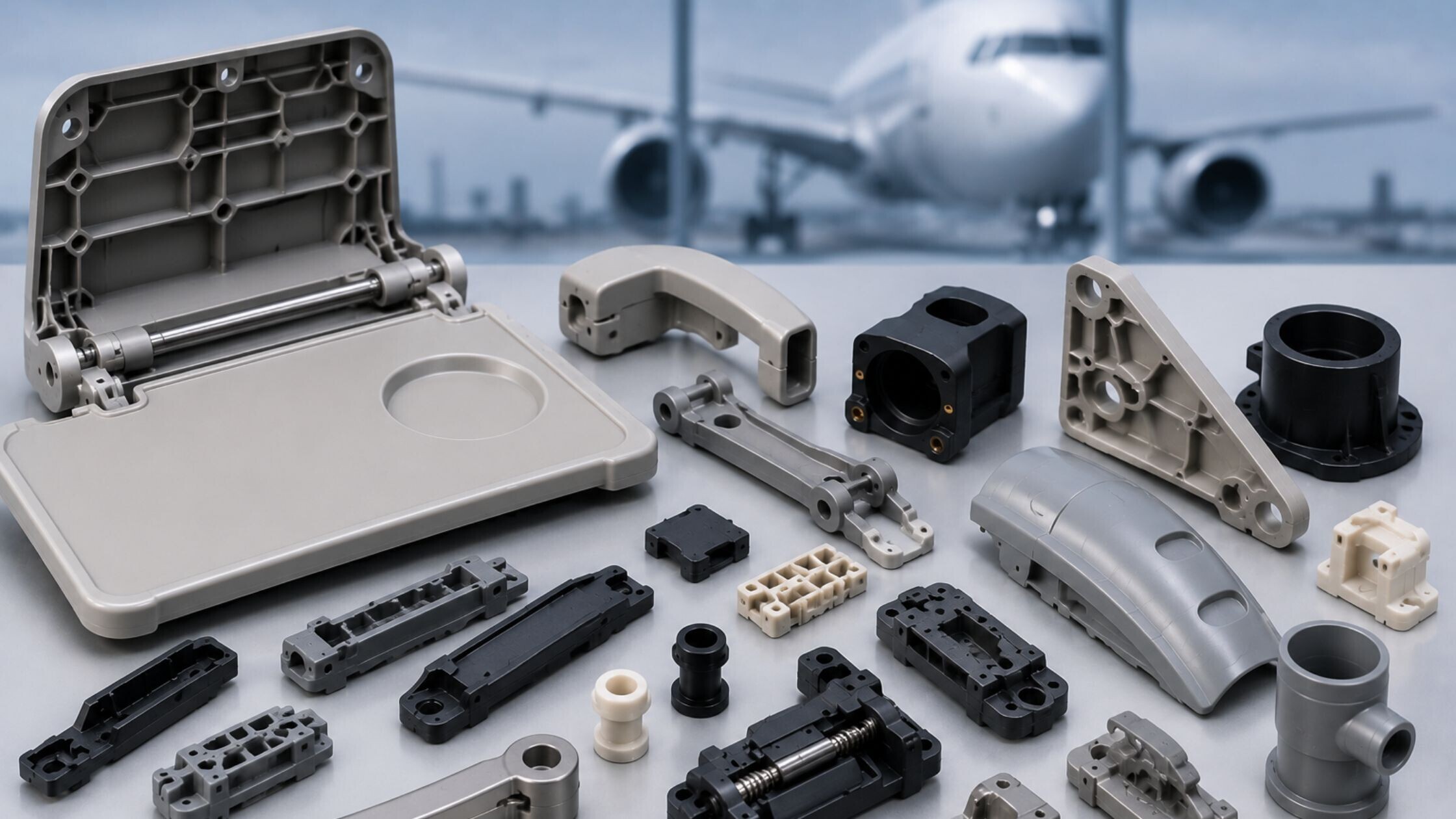
Making an aircraft part is not just about making a mold. The part must first be planned, checked, tested, produced, and assembled correctly. An aviation parts supplier can manage these steps together. This gives aerospace businesses a clear path from a new part design to finished production.
Starting With Aircraft Part Design
The process starts with the part design. A customer can provide a new aircraft part design in 3D form.
Aircraft seating projects can include:
- Seat trays
- Seat brackets
- Seat pockets
- Adjustable seats and arms
- Lumbar support parts
The service is for businesses that need custom parts in large quantities. It is not meant for someone who needs one replacement aircraft part.
Reviewing 3D Data and Materials
Before making the mold, the design and material are reviewed.
Two key details are:
- 3D design data
- Material specifications
This tells the manufacturing team what the part should look like and what material it needs. If the project needs more testing, FEA or mold-flow modeling can be used. FEA means finite element analysis. It is a way to study how a designed part can respond to expected conditions. This early check gives the team more information before the mold is made.
Building and Testing Prototypes
A new aircraft part does not have to go straight into full production.
A prototype can be made first.
The basic path is:
New design → Prototype → Customer approval → Tooling → T-1 sample → Production
Prototype tools can also create:
- Computer-generated images
- Scale models
- Working beta models
This gives the customer something to review before full production starts.
Moving From Approval to Tooling
After the prototype is approved, the production mold can be made.
The mold is chosen based on the:
- Part design
- Material
- Production method
- Number of parts needed
- Expected mold life
Some molds are made for smaller production runs. Other molds can produce millions of parts. For an aviation parts supplier, this means the mold is planned around the actual production needs.
Managing T-0 and T-1 Samples
After tooling, the first sample is called a T-0 sample.
The T-0 sample can show a difference between the planned design and the actual part. If a problem is found, changes can be made.
Then comes the T-1 sample.
The T-1 sample is made after the T-0 changes. It is meant to look and function more like the final part.
The process is:
Tooling → T-0 → Corrections → T-1 → Production
This gives the customer another chance to review the part before full production.
Monitoring Parts During Production
Production needs attention after the mold is ready.
The manufacturing process can include:
- Machine programming
- Production
- Quality checks
- Assembly
Teams also monitor production at partner facilities. They look for quality problems and possible ways to improve production. Customers can also receive regular updates about project progress.
Completing Assembly and Quality Checks
Making the part is only one step. Some aircraft components also need assembly.
Quality checks can include:
- Checking important measurements
- On-site inspection
- Material certificates
- Material testing
- Statistical Process Control
- Third-party inspection
These checks give the production team more information about the parts being made. Correct assembly also matters. Parts must fit together correctly so the finished product can look and function as planned.
Supporting Airplane Seat Back Parts
Custom airplane seat back parts can fit within the broader aircraft seating manufacturing service. Other seating components include seat trays, brackets, seat pockets, adjustable seats and arms, and lumbar support pieces.
Aircraft seating components can use carbon-fiber-reinforced polymers or other high-performance composites. These materials can provide strength while reducing weight. Specific seat-back materials or designs depend on the actual project. They should not be assumed without project details.
Final Thoughts
A custom aircraft part can move through many connected steps: design, material review, prototype, tooling, T-0, T-1, production, assembly, and quality checks. For aerospace businesses, an aviation parts supplier can bring these steps together in one organized production process. This gives custom aircraft components a clearer path from the first design to finished production.