Relocating to a new city or sending your vehicle home doesn’t have to mean days on the highway. Car transportation in India by rail is a safe, affordable, and increasingly popular option for people who want to avoid wear and tear, fuel costs, and driver fatigue. If you’re planning a move and wondering how it works, here’s a simple step-by-step guide.
Why Choose Train Transport for Your Car?
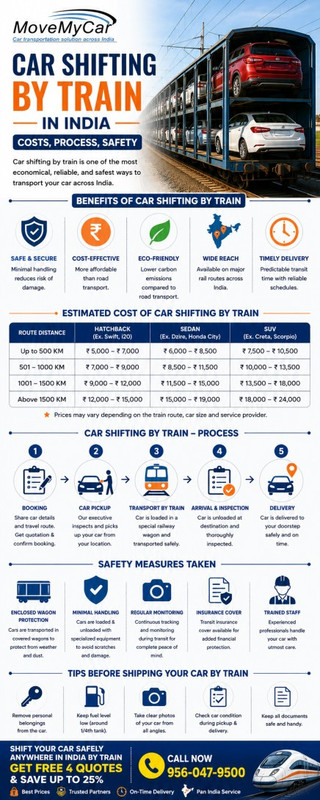
Roads in India can be unpredictable — traffic, potholes, and long distances add stress and risk to any self-drive move. Train transport, mainly offered through Indian Railways’ NMG (Motor Vehicle Parcel Van) rakes, loads your car onto a covered wagon and moves it directly between major cities. It’s often cheaper than hiring a car carrier truck for long distances, and it significantly reduces the chances of accidental damage.
Step 1: Check Route Availability
Not every city has a rail terminal equipped for vehicle loading. Major hubs like Delhi, Mumbai, Chennai, Bengaluru, and Guwahati have dedicated NMG facilities. Confirm that both your origin and destination cities are connected before booking.
Step 2: Get Your Documents Ready
You’ll typically need:
- Vehicle RC (Registration Certificate)
- Valid insurance papers
- A government-issued ID
- A no-objection or booking form from Indian Railways or an authorized transport agent
Step 3: Compare Car Transportation by Train Charges in India
Pricing depends on distance, vehicle size, and whether you book directly through Indian Railways or a private logistics partner who handles pickup and drop-off. On average, car transportation by train charges in India range from ₹5,000 to ₹15,000 for mid-size sedans over long distances, while SUVs and premium vehicles cost more. Always ask for a written quote that includes loading, unloading, and insurance charges to avoid hidden costs.
Step 4: Book Through Railways or a Trusted Agent
You can book directly at the NMG parcel office, but most people prefer using a registered car transport company that manages railway coordination, paperwork, and last-mile delivery to your doorstep. This saves time and reduces the hassle of navigating railway logistics yourself.
Step 5: Inspect and Prepare the Car
Before handover, clean your car and take timestamped photos of its condition from all angles. Remove personal belongings and loose accessories. Check that the fuel tank is at a safe minimum level, as required by railway safety norms.
Step 6: Loading and Transit
Your car is driven onto the wagon ramp, secured with wheel clamps and straps, and placed inside a covered compartment. Transit times vary but are usually faster than road transport for the same distance.
Step 7: Delivery and Final Inspection
On arrival, inspect the car against your earlier photos before signing the delivery receipt. Report any discrepancies immediately.
Final Thoughts
Car transportation in India by train is a reliable middle ground between cost and safety, especially for long-distance moves. By comparing car transportation by train charges in India across providers and choosing a trusted agent, you can ensure your vehicle reaches its destination safely, on time, and without unnecessary expense.