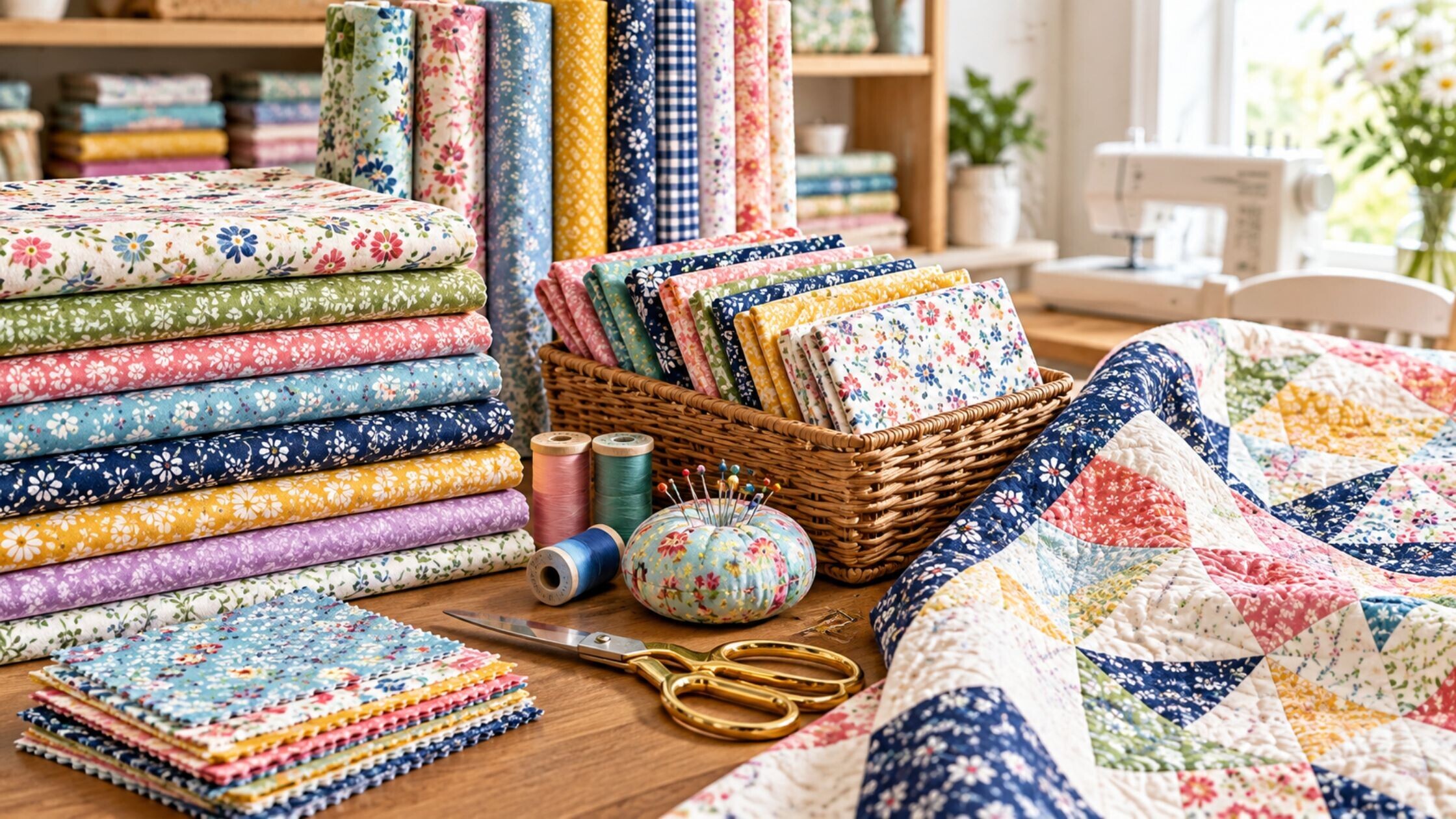
Choosing the right quilting fabric starts with three simple things: the quilt pattern, the fabric quality, and the colors you want to bring together. Cotton is a popular choice because it is easy to cut, sew, and care for. The pattern also matters. Small prints can suit detailed blocks, while larger prints can stand out in simple designs. Think about how the colors will look side by side before buying several pieces. A little planning can save time and make the finished quilt look more balanced and personal.
Start With the Quilt Pattern
The pattern should guide the fabric choice. A quilt with small pieces may need simple prints so the design stays clear. Large prints can work well with bigger blocks where their details have room to show.
Look at the pattern before choosing colors. Notice how many fabrics are needed and whether the design uses light, medium, and dark shades. A simple color plan can make even a complex quilt easier to build.
What Fabric Works Best for Quilting?
Cotton is a trusted choice for most quilting projects. It is soft, strong, and easy to sew. Quilting cotton also comes in a wide range of colors and prints, giving crafters plenty of room to explore different ideas.
Fabric weight and quality also matter. A good fabric should have a firm weave and should not stretch too much. Check the material before cutting. A quick wash can also show how the fabric reacts to water and shrinkage.
How Should Colors and Prints Be Mixed?
Color can change the entire look of a quilt. Some quilters enjoy bright colors, while others prefer soft, calm shades. There is no single right choice. Personal taste should guide the final design.
Try placing fabric pieces next to each other before cutting them. Step back and look at the group as a whole. A mix of light, medium, and dark shades can add depth and make quilt blocks easier to see.
Simple Things to Check Before Buying Fabric
A little care before purchase can prevent common quilting problems. Fabric may look different under store lights or on a screen. Seeing colors in natural light can give a better idea of how they will work together.
Keep these points in mind:
- Check the fabric content and weave.
- Look for even color and clear prints.
- Make sure the fabric is suitable for quilting.
- Compare colors before buying a large amount.
- Consider washing instructions before starting the project.
Planning also matters if several fabrics will be used in one quilt. Buying enough fabric from the same collection or color range can make matching easier. Keep a small fabric sample with the pattern for future reference.
How Much Fabric Should You Buy?
The amount needed depends on the quilt size, pattern, block design, and cutting plan. Patterns normally include fabric requirements, but extra material can be useful for mistakes or future repairs.
Careful measuring can reduce waste. Read the cutting instructions before purchasing fabric. If a design includes repeated blocks, check how the print direction may affect cutting. Some prints look best when placed in a specific direction.
Adding Personality to a Handmade Quilt
Fabric gives a quilt much of its character. A favorite color, a meaningful print, or a mix of old and new patterns can make the finished piece feel personal.
Quilting can also be a chance to try something new without making the project too difficult. Start with colors that are easy to combine, then add one or two interesting prints. Simple choices can create beautiful results.
For crafters exploring other sewing supplies, it is also useful to know where to buy embroidery needles for projects that include decorative stitching alongside quilting. Keeping supplies organized makes it easier to move between different creative tasks.
Final Thoughts
The perfect fabric does not have to be the most expensive or the most eye-catching. It should suit the pattern, work well with the other colors, and match the purpose of the quilt. Take time to compare fabrics before cutting. A thoughtful choice of quilting fabric can turn a simple pattern into a quilt with lasting beauty and personal meaning.