Setting up your first office is exciting, until the quotes start arriving.
Ten desks. Ten chairs. Reception seating. Meeting-room furniture. Storage. Suddenly, your “small office” can require a sizeable upfront investment.
For a cash-conscious UK startup, office furniture shouldn’t consume money that could otherwise fund salaries, marketing, software or product development.
One area where you can potentially make a meaningful saving is used office chairs.
The important word is quality. Buying used isn’t about accepting poor furniture. It’s about finding commercially built chairs that still offer comfort, adjustability and reliable performance at a lower price.
What Could You Save on 10 Chairs?
Let’s use an example to understand the difference.
| New chairs | Good-quality used chairs | |
| Example cost per chair | £180 | £75 |
| Cost for 10 | £1,800 | £750 |
| Difference | – | £1,050 |
These are illustrative figures rather than fixed UK market prices. Actual costs vary according to brand, model, condition, refurbishment and supplier.
But the cash-flow principle is straightforward.
If suitable used chairs save your startup around £1,000 on a 10-desk setup, that money remains available for things that directly support the business.
Why Buy Used Office Chairs?
A quality commercial office chair is designed to withstand regular use. If it has been properly maintained or refurbished, being second-hand doesn’t automatically make it unsuitable.
A good used chair may still provide:
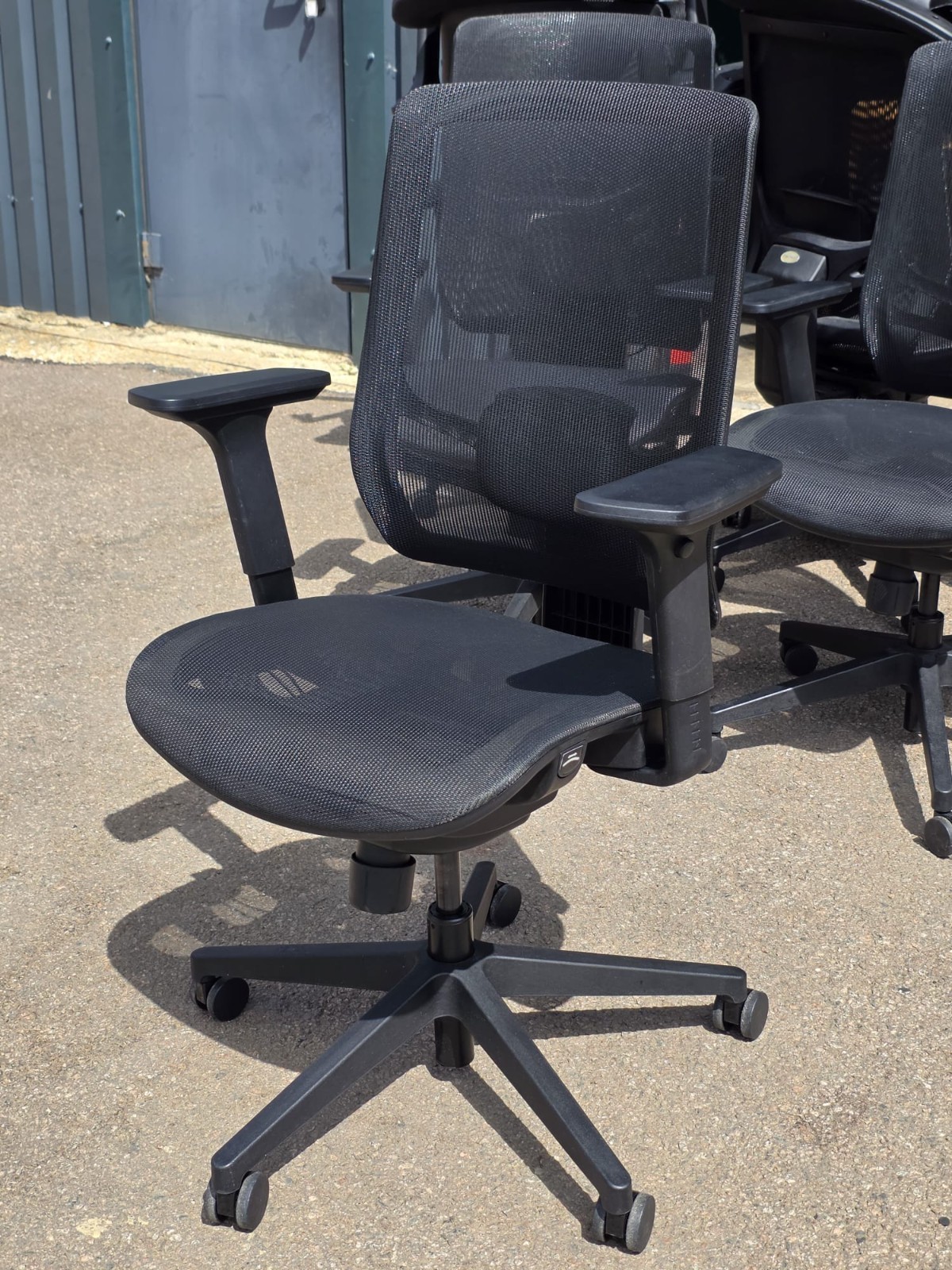
- Adjustable seat height
- Lumbar support
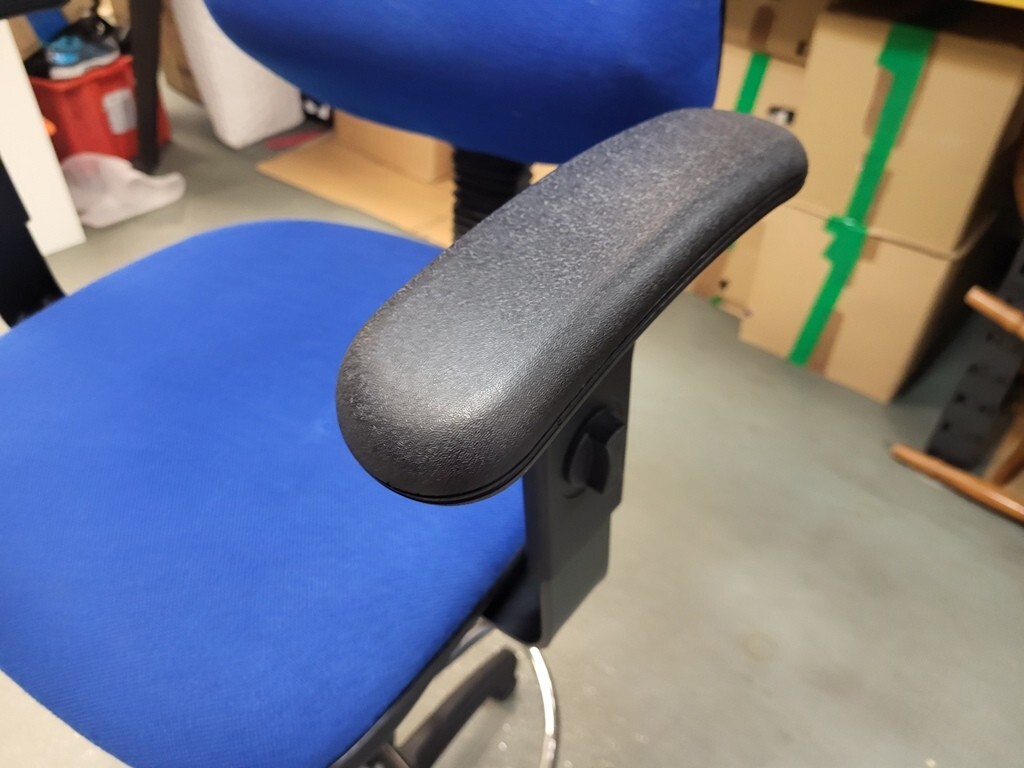
- Adjustable armrests
- Reclining or tilt mechanisms
- Durable upholstery or mesh
- Strong commercial-grade construction
For a startup, these features matter considerably more than having a chair that has never been used before.
The goal should be value, not simply the lowest price.
Don’t Confuse Cheap With Good Value
This is where startups can get caught out.
Suppose you find a new chair for £60. It looks cheaper than a £90 refurbished chair.
But what happens if the £60 chair becomes uncomfortable, develops a faulty mechanism or needs replacing after a short period?
The initial saving may disappear.
A properly inspected used commercial chair can sometimes offer better long-term value than a very cheap new chair.
When comparing second hand office chairs, look beyond the sticker price.
What Should You Check Before Buying?
The condition of a used chair matters more than its age.
Before purchasing, check the following:
- Adjustments
Test the seat-height mechanism, recline, tilt and other adjustments. They should operate smoothly.
- Base and castors
Check for cracks, excessive wear and instability. The chair should roll and stand securely.
- Seat and back
Look for significant damage, excessive sagging or deterioration that could affect comfort.
- Armrests and lumbar support
If these features are important to your team, make sure they actually work rather than simply being present.
- Overall cleanliness
For workplace furniture, hygiene matters. Ask whether chairs have been professionally cleaned or refurbished.
- Supplier transparency
A reputable seller should be able to tell you the chair’s make, model, condition and what refurbishment has been carried out, if applicable.
What About Buying 10 Chairs at Once?
This is where used furniture can become particularly attractive for startups.
Office clearances and refurbished furniture suppliers may have multiple units of the same model available.
Buying 10 matching chairs can help you:
- Keep the office visually consistent
- Avoid mixing different chair standards
- Furnish all desks at once
- Keep your initial spend predictable
However, don’t buy ten chairs simply because they’re available.
Test one first if possible. If your team finds it comfortable and suitable for their work, then consider buying the remaining quantity.
What About Reception Seating?
Your reception area doesn’t necessarily need expensive new furniture either.
A clean, well-presented used reception chair can provide a professional appearance without adding unnecessary cost to the fit-out.
But reception furniture has a different purpose from task chairs. Visitors may only sit for a short period, so you can prioritise appearance, condition and durability while spending more of your budget on chairs employees use every working day.
Where Should a Startup Spend Its Furniture Budget?
Not every saving is worth making.
For employee seating, prioritise:
Comfort.
Adjustability.
Structural condition.
Durability.
Suitability for daily use.
You can compromise on cosmetic imperfections if the chair is mechanically sound and comfortable.
You shouldn’t compromise on a broken mechanism, unstable base or poor ergonomics simply because the price is low.
When Is Buying New the Better Choice?
Used isn’t automatically the right answer.
Buying new may make more sense when you:
- Need a specific ergonomic specification
- Require warranty coverage
- Can’t verify the condition of used chairs
- Need a large quantity that isn’t available second-hand
- Find that refurbished prices are close to new prices
Compare like with like.
A premium refurbished chair at £100 shouldn’t be compared with a basic new chair at £50 simply because both are called “office chairs”.
A Sensible Approach to Furnishing Your First Office
If you’re setting up 10 desks, start with the amount you can comfortably spend,
not with the furniture catalogue.
Then:
Set your total fit-out budget.
Decide what your employees actually need from their chairs.
Compare new and used options with similar specifications.
Inspect or test the chairs wherever possible.
Calculate delivery and any refurbishment costs.
Then choose the option that provides the best combination of comfort, condition and total cost.
What About Second-Hand Used Office Chairs?
The phrase second hand used office chairs can sometimes make buyers think of worn-out furniture at the end of its useful life.
That’s not necessarily what you’re buying.
The second-hand commercial furniture market includes chairs removed from offices during relocations, refurbishments and business closures. Some may have plenty of useful life remaining.
The important thing is to buy based on condition and suitability, not simply the fact that the chair is second-hand.
The Bottom Line
For a startup furnishing 10 desks, buying good-quality used chairs can be a practical way to protect cash flow.
Using our illustrative example, choosing £75 used chairs instead of £180 new chairs reduces the initial spend from £1,800 to £750-a £1,050 difference.
That doesn’t mean every used chair is a good buy.
Check the mechanisms, condition, comfort, cleanliness and supplier reliability. Compare the total cost against a comparable new chair.
If the used option delivers the functionality your team needs at a significantly lower cost, there’s little reason to pay a premium simply because the chair is new.
Your first office needs to support the business, not consume the runway you’re trying to protect.