Maternity leave itself represents a vital interval—one that allows women to prepare for childbirth, recover physically, and build an early bond with their newborn. Yet, behind this deeply personal phase lies a strategic layer where planning, communication, and professionalism play defining roles.
Policy Framework: Building Confidence Through Clarity
India’s extension of maternity leave to 26 weeks under the Maternity Benefit Act has been a remarkably progressive move. It reinforces the idea that supporting working mothers is not just a legal obligation but a forward-looking investment in workforce stability.
Organizations are increasingly aligning with these policies, integrating structured benefits with inclusive workplace cultures. Within this system, the application for maternity leave acts as the first formal bridge—connecting employee needs with organizational processes.
Why an Application for Maternity Leave Is More Than a Request
A thoughtfully written application for maternity leave does more than notify—it reassures. It communicates preparedness, responsibility, and respect for team dynamics, all while setting clear expectations.
Think of it as a strategic blueprint. It defines timelines, outlines responsibilities, and ensures that workflows remain uninterrupted. When crafted effectively, it becomes a remarkably effective tool for maintaining professional credibility during a temporary absence.
Crafting a High-Impact Application for Maternity Leave
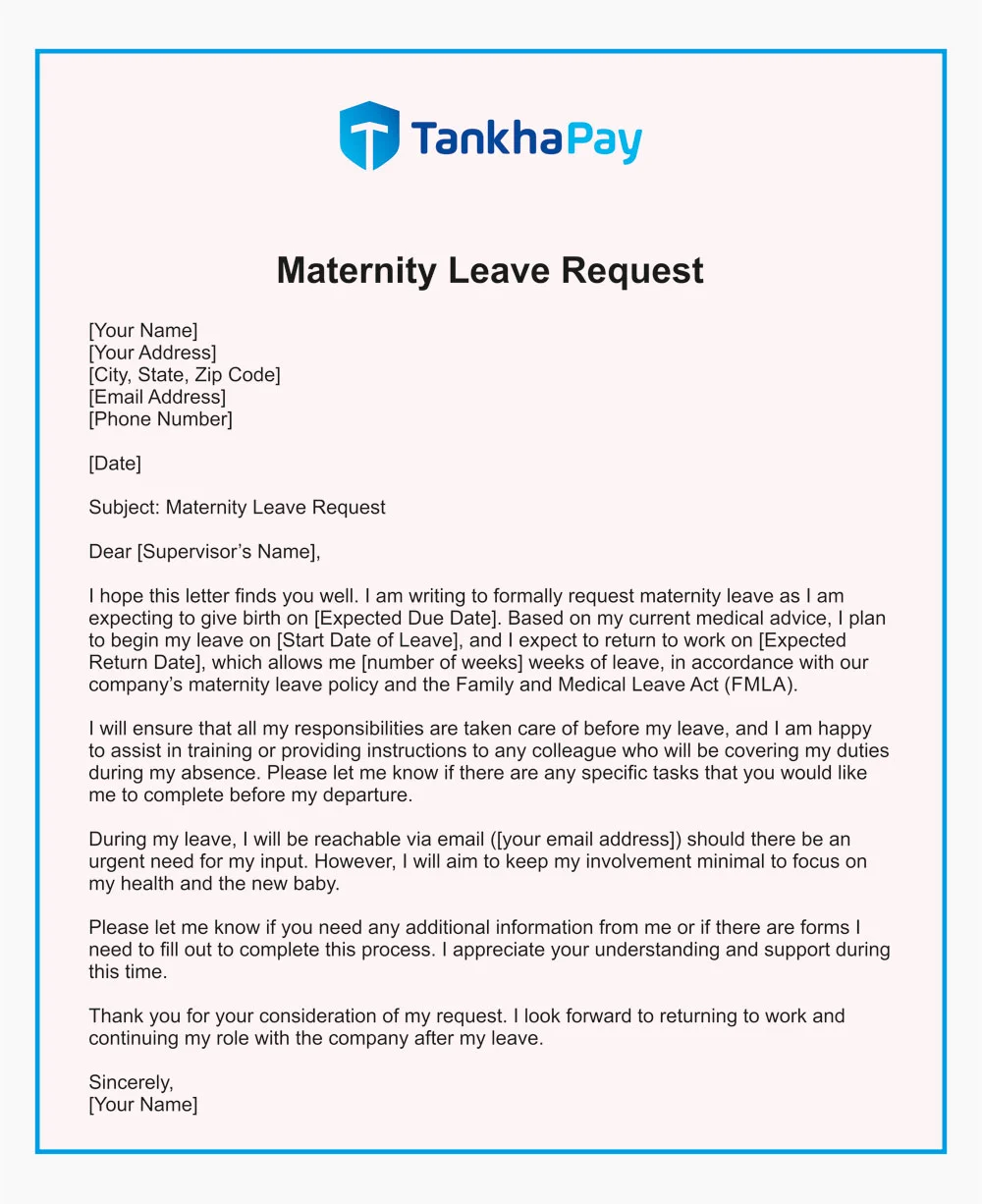
An impactful application for maternity leave combines precision with clarity. It is formal in tone yet empathetic in delivery, ensuring that every essential detail is communicated without ambiguity.
Key components include:
- A clear subject line stating the purpose
- Specific leave dates aligned with medical advice
- Expected due date, where applicable
- A structured handover plan for responsibilities
- Defined communication preferences during leave
- Supporting medical documents, if required
By integrating these elements seamlessly, the application transforms into a compelling and professional narrative.
Planning Ahead: The Foundation of a Smooth Transition
Preparation is often the silent driver behind a successful maternity leave experience. Without it, even supportive policies may fall short in practice.
Financial planning, early discussions with HR, and proactive delegation of tasks create a stable transition. By addressing these factors in advance, expecting mothers can focus fully on recovery and childcare—without lingering professional concerns.
This approach, when executed thoughtfully, proves both practical and empowering.
Communication During Leave: Striking the Right Balance
Navigating workplace communication during maternity leave requires a nuanced approach. While some prefer minimal engagement, others maintain occasional check-ins to stay aligned with ongoing developments.
A well-defined communication plan within the application for maternity leave helps avoid confusion. Whether it involves limited availability or emergency-only contact, clarity ensures mutual understanding between employee and employer.
Broader Perspective: Inclusion and Evolving Work Culture
The growing emphasis on maternity benefits reflects a larger shift toward inclusivity in the workplace. Today, policies extend beyond traditional frameworks to include adoptive and surrogate mothers, making support systems more comprehensive.
This evolution positions the application for maternity leave as more than a document—it becomes a symbol of rights, dignity, and progressive work culture.
Employer’s Perspective: Continuity with Compassion
From an organizational standpoint, maternity leave requires thoughtful planning. However, a well-structured application significantly reduces disruption by outlining clear strategies for continuity.
Companies that support such transitions often witness higher employee retention and stronger workplace loyalty. In a competitive talent market, these qualities are not just beneficial—they are essential.
Future of Applications for Maternity Leave
As workplaces embrace digital transformation, the application for maternity leave is also evolving. AI-driven HR systems, hybrid work models, and flexible schedules are reshaping how leave is requested and managed.
By integrating technology with empathy, organizations can create systems that are both efficient and human-centric—ensuring smoother transitions for working mothers.
Final Thought
At its core, an application for maternity leave is more than a formal request—it is a professional expression of preparedness during a life-changing phase. It reflects a balance of responsibility and personal care, structured thoughtfully within a formal framework.
When written effectively, it empowers women to step into motherhood with confidence, knowing their professional identity remains secure.
In an increasingly performance-driven world, this application stands as a powerful reminder that true progress lies in supporting both careers and life beyond work.