High-Speed Rotary Indexer: A Practical Guide for Manufacturers
Introduction
If you run a production line, you already know one thing — speed without accuracy is useless. That’s exactly where a high-speed rotary indexer earns its place on the factory floor.
I’ve spent years around automation equipment, and I can tell you this: the difference between a smooth production run and a costly breakdown often comes down to the indexing drive you chose.
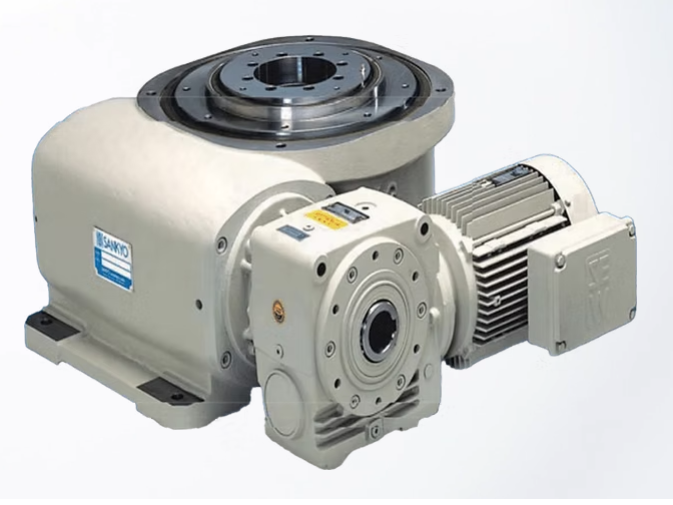
In this guide, we’ll break down what a high-speed rotary indexer actually is, how a CAM rotary indexer works, and why picking the right rotary indexing table matters more than most people think. No jargon overload — just straight, useful information.
What is a High-Speed Rotary Indexer?
A high-speed rotary indexer is a mechanical device that rotates a table or platform through fixed angular steps, at speed, with high repeat accuracy.
Quick Answer (for featured snippets): A high-speed rotary indexer is an automation component that moves parts or tooling through precise, repeatable rotational steps, allowing multiple assembly or machining operations to happen automatically, one station at a time.
Think of it like a merry-go-round that stops at exact points, every single time, thousands of times a day, without drifting off position.
It’s the backbone of many:
- Assembly lines
- Packaging machines
- Inspection systems
- Pharmaceutical filling lines
- Electronics manufacturing setups
Benefits of a High-Speed Rotary Indexer
Here’s why manufacturers keep coming back to rotary indexing systems instead of manual or linear alternatives.
| Benefit | Why It Matters |
| High repeat accuracy | Parts land in the exact same spot every cycle |
| Faster cycle times | More output per hour, less downtime |
| Reduced labor cost | Less manual handling needed |
| Longer machine life | CAM-driven motion reduces wear and shock |
| Compact footprint | Multiple stations fit in a small area |
A CAM rotary indexer, in particular, gives you smooth acceleration and deceleration. That matters because sudden jerky motion damages parts, tooling, and the machine itself over time.
Real-world example: A packaging plant switching from a linear transfer system to a rotary indexing table typically sees fewer jams and a noticeable jump in throughput — simply because the motion path is shorter and more controlled.
How Does a High-Speed Rotary Indexer Work?
At its core, a cam indexing drive uses a rotating cam and a follower mechanism (often a roller or gear-type follower) to convert continuous input motion into precise stop-start rotational output.
Simple breakdown:
- A motor drives the input shaft continuously.
- The cam profile controls how the output shaft moves.
- During the “dwell” phase, the table stays perfectly still — this is when work happens (welding, filling, inspecting).
- During the “index” phase, the table rotates smoothly to the next station.
This dwell-and-index cycle is what makes rotary indexing tables so reliable for multi-station automation. There’s no servo lag, no software glitch risk — just mechanical precision.
Voice search answer: “How does a rotary indexer work?” — A rotary indexer works by using a cam mechanism to alternate between a stationary dwell period and a rotational index period, allowing precise, repeatable positioning without stopping the main drive motor.
Why Choose Deceler?
Not every indexing drive is built the same, and that’s where Deceler comes in.
Deceler designs CAM rotary indexers and indexing tables focused on three things: precision, durability, and ease of integration.
What sets Deceler apart:
- Tight repeat accuracy, even at high cycle speeds
- Rugged construction built for continuous industrial use
- Flexible station configurations to match your existing layout
- Engineering support during the design and installation phase
If you’re upgrading an old line or building a new one from scratch, Deceler‘s indexing solutions are built to reduce downtime, not add to it.
Common Mistakes to Avoid
Even experienced buyers make these errors when selecting an indexing system:
- Choosing speed over load capacity — a fast indexer that can’t handle your part weight will wear out quickly.
- Ignoring dwell time needs — some processes need longer dwell periods than others; skipping this check causes production bottlenecks.
- Skipping maintenance planning — cam-driven systems last longer with scheduled lubrication and inspection.
- Wrong station count — overcrowding stations reduces flexibility for future upgrades.
- Not matching motor torque to indexer specs — mismatched components strain the whole system.
Avoiding these mistakes early saves both money and headaches down the road.
Frequently Asked Questions
Q1: What is the difference between a CAM rotary indexer and a servo indexer?
A CAM rotary indexer uses a mechanical cam for motion control, offering high reliability and lower cost. A servo indexer uses electronic motor control, offering more flexibility but higher complexity and cost.
Q2: How accurate is a rotary indexing table?
Most industrial rotary indexing tables achieve repeat accuracy within a few arc-seconds to arc-minutes, depending on design and load.
Q3: What industries use high-speed rotary indexers?
Automotive, packaging, pharmaceuticals, electronics, and food processing industries widely use rotary indexers for automated assembly and inspection.
Q4: How long does a cam indexing drive last?
With proper maintenance and correct load matching, a cam indexing drive can run reliably for 10+ years in continuous industrial use.
Q5: Can a rotary indexer be customized for specific station counts?
Yes, most manufacturers, including Deceler, offer custom station configurations based on your specific process requirements.
Q6: What maintenance does a rotary indexing table need?
Routine lubrication, periodic backlash checks, and cam surface inspection are the main maintenance tasks for long-term reliability.
Q7: Is a high-speed rotary indexer suitable for small production lines?
Yes, compact rotary indexers work well for small-batch or space-limited production lines while still improving speed and accuracy.
Conclusion
Choosing the right high-speed rotary indexer isn’t just a technical decision — it directly affects your output, your downtime, and your bottom line.
Whether you need a CAM rotary indexer for precision assembly or a full rotary indexing table setup for a multi-station line, getting the fundamentals right matters more than chasing the fastest spec sheet.
If you want a partner who understands both the engineering and the real-world factory floor demands, Deceler is worth talking to before you finalize your next automation project.