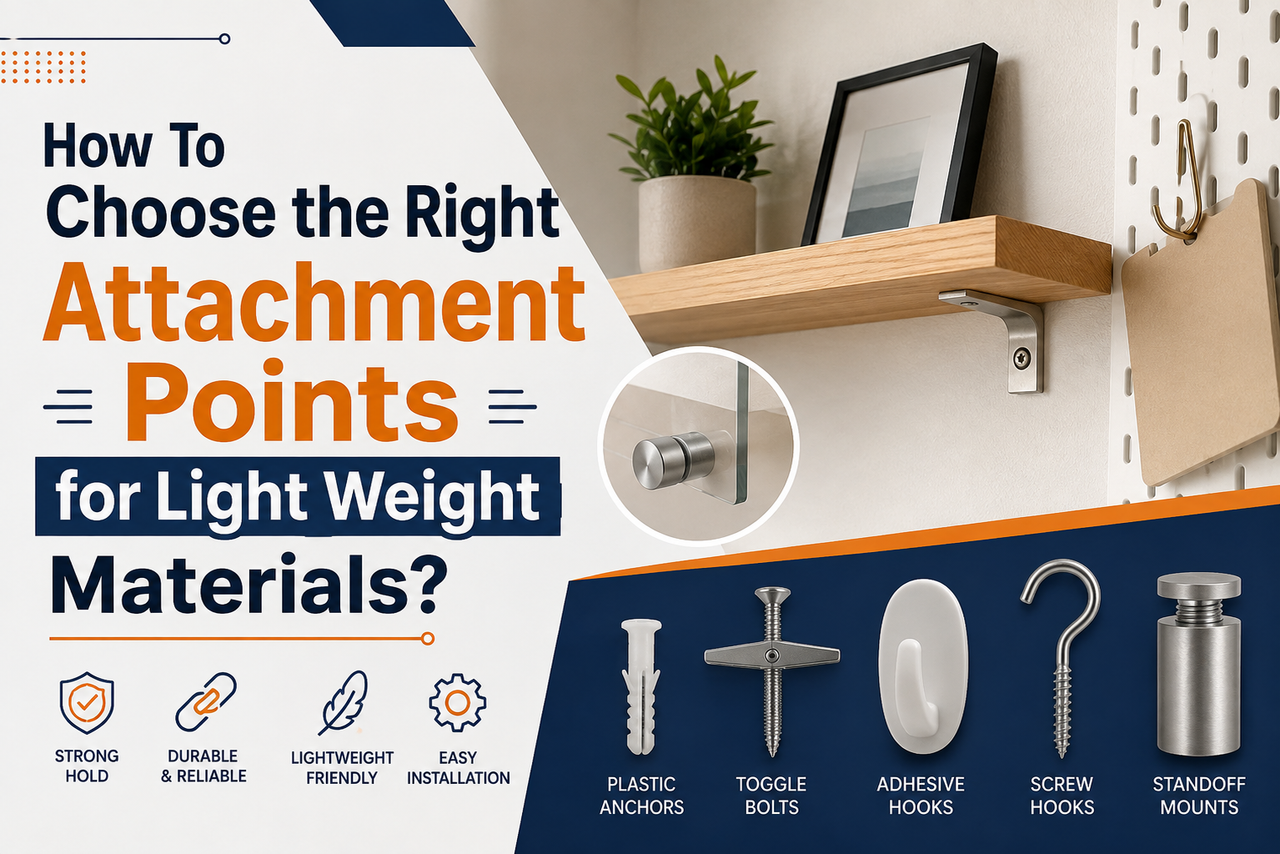
Have you ever watched a beautifully installed panel come crashing down because someone chose the wrong fixings? Or wondered why that lightweight cladding started warping just months after installation? What makes the difference between a secure, long-lasting attachment and one that fails spectacularly?
Choosing the right attachment points for lightweight materials isn’t just a technical checkbox—it’s the foundation of every successful project. Whether you’re working on a commercial building in Melbourne, fitting out a caravan in Queensland, or installing signage in Sydney, getting this decision wrong can cost you time, money, and your reputation. The tricky part? Lightweight materials behave nothing like traditional heavy-duty substrates, and what works for one simply won’t cut it for another.
Understanding Lightweight Materials and Their Unique Challenges
What Are Lightweight Materials?
Lightweight materials are exactly what they sound like—substrates that offer reduced weight compared to traditional building materials like steel, concrete, or solid timber. They typically weigh significantly less per square metre while still providing adequate structural performance for their intended applications.
These materials have revolutionised modern construction and manufacturing. They allow for faster installation, reduced structural load requirements, and often improved thermal or acoustic properties. From aluminium composite panels to foam-core boards, the variety available today is genuinely impressive.
Common Types of Lightweight Materials Used in Construction and Manufacturing
You’ll encounter several lightweight materials across Australian projects. Aluminium composite panels (ACPs) dominate commercial facades. Fibre cement sheets are popular for residential applications. Polycarbonate and acrylic sheets feature heavily in roofing and signage. Honeycomb panels, foam-core boards, and thin metal sheets round out the most common options.
Each material brings unique characteristics to the table. Some flex under load, others crack under pressure, and a few will deform permanently if attached incorrectly. Understanding these behaviours is absolutely key to selecting appropriate attachment points
Why Do Lightweight Materials Require Special Attachment Considerations?
Here’s the thing—lightweight materials can’t handle stress the same way heavier substrates can. Their reduced mass often means thinner profiles, lower density cores, or composite constructions that distribute load differently. A standard heavy-duty fixing that would perform brilliantly in solid timber might tear straight through a thin aluminium sheet.
Additionally, lightweight materials often expand and contract more noticeably with temperature changes. They may vibrate differently under wind load or mechanical stress. These factors all influence how and where you place your attachment points.
What Are Attachment Points and Why Are They Critical?
Defining Attachment Points for Lightweight Applications
Attachment points are the specific locations where fasteners, adhesives, or mechanical fixings connect your lightweight material to its supporting structure or to other components. Think of them as the bridge between your material and whatever’s holding it in place.
For lightweight applications, these points must be strategically positioned to distribute load effectively without overstressing any single area. Getting the placement right matters just as much as choosing the correct fastener type.
The Role of Load Distribution in Material Integrity
Load distribution is where many installations come unstuck—literally. When you concentrate too much force on a small area of a lightweight material, you risk:
- Pull-through failure (fastener tears through the material)
- Localised deformation or buckling
- Stress cracking that spreads over time
- Premature wear at connection points
Proper attachment point selection spreads the load across a larger area, keeping stress levels within the material’s tolerance limits. This is why backing plates, washers, and specialised fastening systems exist specifically for lightweight applications.
Key Factors to Consider When Choosing Attachment Points
Material Composition and Thickness
Start by understanding exactly what you’re working with. A 3mm aluminium composite panel behaves very differently from a 6mm fibre cement sheet. Check manufacturer specifications for recommended fastener types and minimum edge distances.
Composite materials with foam or honeycomb cores need particular attention. The outer skins may be strong, but the core material often has minimal pull-out resistance. You might need fasteners that grip both faces or spread the load across a larger area.
Load-Bearing Requirements and Weight Capacity
Calculate your actual load requirements before selecting attachment points. Consider:
- Dead load (the weight of the material itself)
- Live load (additional forces from wind, people, or equipment)
- Dynamic load (vibration, movement, or impact forces)
Australian conditions can be harsh—cyclonic regions demand much higher wind load ratings than sheltered urban environments. Always design for the worst-case scenario, not average conditions.
Environmental Conditions and Exposure
Outdoor installations face UV exposure, moisture, temperature extremes, and salt spray in coastal areas. Your attachment points must resist corrosion and maintain their integrity across all conditions. Stainless steel fasteners are often worth the extra cost for exposed applications.
Indoor environments aren’t always straightforward either. High-humidity areas like bathrooms or swimming pool enclosures require corrosion-resistant fixings, while industrial settings might introduce chemical exposure.
Vibration and Movement Considerations
Materials that vibrate—whether from machinery, traffic, or wind—need attachment points that accommodate movement without loosening or fatiguing. Consider using fasteners with locking features, flexible connections, or vibration-dampening washers.
Thermal movement is another factor. Lightweight materials often have higher thermal expansion rates than their supporting structures. Slotted holes or flexible fixing systems allow for this movement without creating stress concentrations.
Aesthetic Requirements and Visibility
Sometimes, visible fasteners simply won’t do. For high-end architectural applications, you might need concealed fixing systems, structural adhesives, or flush-mounted options. These typically cost more and require precise installation, but the visual result justifies the investment.
How Do You Attach Something to a Lightweight Panel?
Step-by-Step Selection Process
- Identify your material – Know the exact composition, thickness, and manufacturer recommendations
- Calculate your loads – Factor in all static, dynamic, and environmental forces
- Determine spacing requirements – More attachment points mean better load distribution
- Select appropriate fastener type – Match to material properties and load requirements
- Plan edge distances – Maintain minimum distances from edges to prevent tear-out
- Consider movement allowance – Build in tolerance for thermal expansion
Matching Fasteners to Material Types
Different materials demand different approaches. Thin metal sheets often work well with self-drilling screws or blind rivets. Composite panels may need toggle bolts or specialised inserts. Plastic sheets typically require oversize washers to prevent cracking.
Always test your chosen fixing method on a sample piece before committing to the full installation. What looks good on paper doesn’t always perform as expected in practice.
What Is the Best Fastener for Thin Materials?
Comparing Rivets, Screws, and Adhesive Options
Rivets offer permanent connections with excellent vibration resistance. They’re quick to install and work well for joining thin materials together. However, they’re difficult to remove and require access to both sides during installation.
Screws provide adjustability and removability. Self-drilling varieties eliminate the need for pilot holes, while machine screws with threaded inserts offer stronger, reusable connections.
Adhesives distribute load across the entire bonded area, eliminating stress concentrations around fastener holes. Structural adhesives can be incredibly strong, but they require proper surface preparation and curing time.
When to Use Specialised Lightweight Fastening Systems
Specialised systems like toggle bolts, moulded-in inserts, and backing plate assemblies exist because standard fasteners simply don’t cut it for many lightweight applications. When you’re working with hollow-core panels, very thin materials, or high-load situations, these purpose-designed solutions are worth investigating.
Can You Use Standard Fixings on Lightweight Materials?
Risks of Using Incorrect Attachment Methods
Using standard fixings on lightweight materials is tempting—they’re readily available and cheap. But the risks are significant. Pull-through failure, cracking, crushing of soft cores, and inadequate thread engagement can all lead to catastrophic failures.
Signs of Attachment Point Failure
Watch for dimpling around fastener heads, visible cracking, loosening connections, or unusual movement during wind events. Early detection prevents bigger problems down the track.
Common Mistakes to Avoid When Selecting Attachment Points
- Over-tightening fasteners and crushing the material
- Ignoring manufacturer specifications
- Using too few attachment points
- Neglecting corrosion protection
- Forgetting thermal movement allowance
- Placing fasteners too close to edges
Making the Right Choice for Long-Term Performance
Selecting the right attachment points for light weight materials requires careful consideration of multiple factors—material properties, load requirements, environmental conditions, and aesthetic needs all play crucial roles. There’s no universal solution that works for every situation, which is why understanding these principles matters so much.
The best approach combines manufacturer guidance with practical experience. Don’t skip the testing phase, invest in quality fasteners appropriate for your application, and always design for real-world conditions rather than ideal scenarios. When in doubt, consult with engineers or technical specialists who know Australian conditions.
Your attachment points might be small components in the overall project, but they’re absolutely critical to long-term performance. Take the time to get them right, and your installations will reward you with years of reliable service. Cut corners here, and you’ll be back fixing problems before you know it. The choice really is that straightforward.