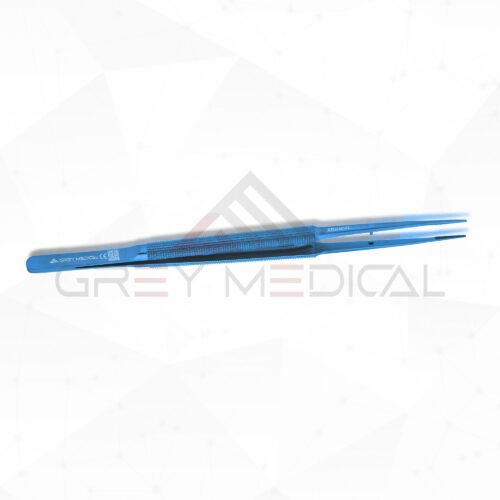
Microsurgery leaves no margin for imprecise instruments. Surgeons work under magnification on structures measured in fractions of a millimeter, where a slight tremor or an unbalanced grip damages tissue that cannot easily heal. The instrument must translate the smallest hand movement into an exact action at the tip. This is where microsurgical forceps earn their place. Their fine tips grip vessels, nerves, and sutures too small for standard forceps to handle safely. A well-made pair transmits force smoothly from the surgeon’s fingers to the working end, which keeps the grip controlled and the tissue intact. Precision at that scale depends entirely on the tool.
The Grey Medical Standard
GREY MEDICAL: Welcome to Grey Medical, your trusted partner in premium-quality surgical instruments. With decades of experience in the medical industry, we pride ourselves on delivering precision-crafted tools designed to meet the rigorous demands of surgeons, doctors, and medical professionals worldwide. That experience shapes how we build each instrument. We test forceps against the conditions of real microsurgery, not against a specification sheet. This means the tips stay aligned, the spring tension holds through repeated use, and the finish survives years of sterilization without pitting or corroding.
Common Applications in Surgery
Microsurgery spans several specialties, and each one relies on fine forceps for distinct tasks. Ophthalmic surgeons knife use them to grasp the delicate membranes of the eye. Reconstructive surgeons use them to hold vessels during anastomosis, the joining of two blood vessels. Neurosurgeons use them to manipulate nerve tissue without crushing it. The common thread across these fields is scale. Each procedure works on structures too small for the naked eye and too fragile for ordinary instruments. A dependable microsurgical forceps handles these tasks by combining a fine tip with a stable, predictable grip. Matching the instrument to the specialty keeps the tissue safe and the procedure on course.
Delicate Tissue Manipulation
Delicate tissue tears under uneven pressure. A vessel wall, a nerve sheath, or a fine suture demands a grip that holds securely without crushing, and that balance is difficult to achieve. Too much force damages the structure. Too little force lets it slip. Fine forceps solve this through tip geometry and spring design. Narrow, precisely aligned tips distribute pressure evenly across a tiny contact area. Calibrated spring tension gives the surgeon feedback through the fingers, which signals how firmly the tips are closing. This enables a controlled grip that secures the tissue without deforming it.
Instrument Design and Tip Geometry
Design determines how a forceps performs at the working end. The tips must meet in exact alignment, because even a slight offset lets fine sutures or tissue slip between them. The shafts must taper smoothly to keep the surgeon’s view of the field unobstructed under magnification. Tip style follows the task. Straight tips suit direct grasping in an open field. Angled tips reach around structures without blocking the line of sight. Tying platforms, meaning flattened surfaces near the tip, help hold fine suture during knot placement. Each microsurgical forceps design answers a specific surgical need, and selecting the right geometry improves both control and speed.
Material Quality and Durability
Material determines how long an instrument holds its precision. Fine tips bend easily, misalign under stress, and lose their grip when made from inferior steel. Once the tips fall out of alignment, the forceps can no longer grasp small structures reliably, and the instrument becomes unusable for microsurgery. Medical-grade stainless steel serves this application because it resists corrosion and holds a precise shape under repeated use. A passivated surface, meaning steel treated to resist rust, stays smooth through years of handling. Titanium offers a lighter alternative that resists magnetism and corrosion, which suits delicate procedures where weight and steadiness matter. Certified material is the foundation of a forceps that performs across its full service life.
Sterilization Durability
Sterilization protects the patient, and the instrument must survive the process without degrading. Autoclaving exposes forceps to high-pressure steam near 134 degrees Celsius, repeated across hundreds of cycles. Steel that cannot tolerate this heat pits and corrodes, and corrosion at the fine tips destroys the alignment that microsurgery depends on. Well-made forceps resist this damage through corrosion-resistant finishing and precise construction. A smooth, passivated surface withstands repeated cycles without pitting. Clean joints and seamless shafts leave no crevice where residue can collect. These features keep the instrument safe to reuse across many procedures without loss of precision.
Ergonomic Control and Handling
Control depends on how the instrument feels in the hand during long procedures. Microsurgery can require hours of steady work, and an unbalanced or heavy forceps causes hand fatigue that undermines precision. A tired hand trembles, and tremor at the tip damages delicate tissue. Careful construction addresses this directly. A balanced weight distribution keeps the instrument steady with minimal effort. Textured or rounded handles give the fingers a secure hold without cramping. Calibrated spring tension lets the surgeon open and close the tips smoothly across the full length of a case. These details reduce fatigue and keep the surgeon’s action precise from the first minute to the last.
Why Choosing a Trusted Supplier Matters
An instrument performs only as well as the process that produced it, and inconsistent processes produce unreliable tools. A low purchase price means little if the tips misalign after a few cases, the spring loses tension, or the finish corrodes in the autoclave. The real cost includes every replacement, every interrupted procedure, and every case complicated by a failing instrument. A trusted supplier removes that uncertainty. Consistent manufacturing means each microsurgical forceps matches the last. Certified steel means the material performs as specified. Staged inspection means defects are caught before delivery. Sourcing from a proven supplier is a decision about reliability, safety, and long-term value rather than initial price alone.
Conclusion
Precise surgery depends on precise instruments, and at the scale of microsurgery that precision is absolute. A well-made forceps holds its tip alignment, resists corrosion, survives repeated sterilization, and grips delicate tissue without crushing it. Each design, from straight to angled tips, from steel to titanium, answers a specific surgical need. Understanding those differences lets surgeons match the instrument to the task with confidence. Grey Medical builds each pair to that standard, combining precise manufacturing with decades of clinical experience. For surgeons working at the edge of what the hand can do, a dependable instrument is a requirement, not a preference.