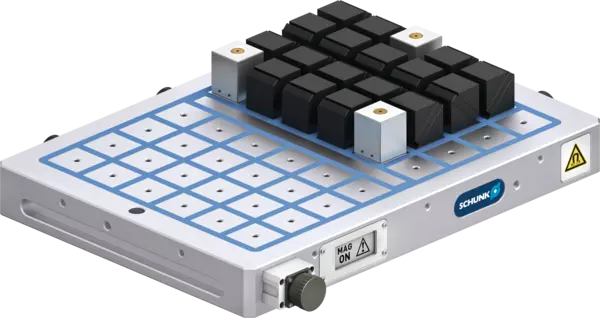
Modern manufacturing increasingly relies on automation technologies that can handle components accurately, securely and efficiently. From machining and assembly to robotic material handling, manufacturers need gripping and clamping solutions that match the material, geometry and requirements of each application. Two technologies that serve different but important purposes are magnetic clamping systems and micro vacuum grippers.
A magnetic clamping system can securely hold suitable ferromagnetic workpieces, particularly during machining operations. A micro vacuum gripper, meanwhile, uses vacuum technology to handle small or delicate components where conventional mechanical gripping may be difficult. Understanding how these technologies work and where they are best suited can help manufacturers develop more reliable automated processes.
What Is a Magnetic Clamping System?
A magnetic clamping system uses magnetic force to hold suitable ferromagnetic workpieces securely in position. Unlike conventional mechanical clamps, magnetic systems can apply holding force without requiring physical clamping elements to surround or press against multiple sides of the workpiece.
This can be particularly useful in machining applications where unrestricted access to the workpiece surface is important.
How Magnetic Clamping Works
Magnetic clamping systems generate a magnetic field that attracts and holds compatible workpieces. Depending on the technology, systems may use permanent magnets, electromagnetic principles or other magnetic solutions.
Once the workpiece is positioned correctly, the magnetic force provides the holding action needed to keep it stable during the relevant process.
The exact performance depends on factors such as material, workpiece thickness, surface condition and magnetic contact.
Advantages of Magnetic Clamping
Magnetic clamping can provide several practical benefits in suitable manufacturing applications.
Greater Access to the Workpiece
Traditional mechanical fixtures can occupy space around a component. Magnetic clamping can reduce some of these physical obstructions, potentially providing greater access for machining tools.
This can be valuable when processing larger or complex components where tool accessibility is important.
Faster Workpiece Setup
Depending on the system, magnetic clamping can simplify the process of positioning and securing a workpiece. Reducing setup activities can help manufacturers minimise non-productive time between machining cycles.
Even Holding Force
Magnetic clamping can distribute holding force across an appropriate magnetic surface. This can help maintain stable workpiece positioning during machining when the system is correctly selected for the application.
Where Are Magnetic Clamping Systems Used?
Magnetic clamping is particularly relevant to machining and metalworking applications involving suitable ferromagnetic materials.
CNC Machining
Magnetic workholding can be used to secure compatible metal components during milling and other machining operations.
Grinding
Grinding applications can benefit from stable workpiece positioning, particularly when surface access is important.
Metal Processing
Manufacturing environments handling steel and other magnetic materials may use magnetic workholding to simplify component positioning and processing.
The exact application should always be evaluated to ensure that the magnetic system provides sufficient holding force under actual operating conditions.
Factors to Consider Before Selecting Magnetic Clamping
Not every metal component is automatically suitable for magnetic clamping. Several factors should be considered.
Material
The workpiece needs to have appropriate magnetic properties. Ferromagnetic materials are generally the primary candidates for magnetic clamping.
Thickness
Workpiece thickness can influence how effectively magnetic force is transferred. Thin materials may require particular consideration during system selection.
Surface Condition
Paint, coatings, gaps, surface irregularities and contamination can affect the contact between the magnetic system and the workpiece.
Machining Forces
Cutting forces must be evaluated carefully. The clamping system needs sufficient holding capacity for the intended operation, including appropriate safety considerations.
What Is a Micro Vacuum Gripper?
A micro vacuum gripper is a compact gripping solution that uses vacuum pressure to pick up and hold small components. It can be particularly useful in automated applications involving lightweight, delicate or miniature parts.
Instead of mechanically squeezing a component, a vacuum gripper creates suction between the gripping surface and the workpiece.
This approach can reduce the need for mechanical jaws and may provide a gentle method of handling suitable components.
Where Are Micro Vacuum Grippers Used?
Micro vacuum gripping can be useful in applications where components are too small, delicate or geometrically challenging for conventional gripping mechanisms.
Electronics and Small Components
Small electronic parts can require precise handling. A compact vacuum gripper can provide a controlled way to pick and place components when the surface is suitable for vacuum gripping.
Assembly Applications
Automated assembly processes often involve positioning small components repeatedly. Micro vacuum technology can support accurate pick-and-place operations when appropriately configured.
Laboratory and Precision Handling
Small components used in specialised manufacturing or laboratory-related processes may benefit from compact gripping solutions that minimise physical contact.
Advantages of Micro Vacuum Grippers
Micro vacuum technology can provide several benefits for automated handling.
Gentle Handling
Because the gripping force is applied through suction rather than mechanical jaws, vacuum handling can reduce the risk of marks or deformation on suitable components.
Compact Design
A small gripper can be useful where robot or automation tooling has limited available space.
Precise Pick-and-Place
Micro vacuum grippers can support repeatable handling of small components, making them suitable for automated production environments where consistent positioning is important.
Magnetic Clamping vs. Micro Vacuum Gripping
Although both technologies involve non-conventional holding methods, they serve different purposes.
A magnetic clamping system is primarily designed to secure suitable ferromagnetic workpieces during processes such as machining. A micro vacuum gripper is intended for handling small components through suction.
The material and application should therefore determine which technology is appropriate.
Magnetic Clamping Is Better Suited To
- Ferromagnetic workpieces
- Machining and metalworking
- Applications requiring stable workholding
- Processes where surface access is important
Micro Vacuum Gripping Is Better Suited To
- Small components
- Lightweight workpieces
- Suitable smooth or sealed surfaces
- Automated pick-and-place and assembly
Integrating Gripping and Clamping Into Automation
Modern automated production often requires multiple holding technologies within the same manufacturing workflow.
For example, a robot may use a vacuum gripper to pick a component from a conveyor and position it into a machining fixture. A magnetic clamping system may then secure the workpiece while machining takes place. After processing, the automation system can remove the finished component and transfer it to another production stage.
This type of integrated workflow can reduce manual intervention and improve process consistency.
Improving Production Efficiency
Automated gripping and clamping can reduce repetitive manual handling and create more predictable production cycles. When components are picked, positioned and secured consistently, manufacturers may be able to reduce setup variability.
The right technology can also support faster changeovers and more efficient use of machinery.
Selecting the Right Technology
Choosing between magnetic and vacuum solutions requires an application-specific assessment.
Manufacturers should consider:
Material: Is the workpiece magnetic, porous, smooth or otherwise suitable for the selected gripping principle?
Weight: Can the system safely handle the required load?
Geometry: Does the component provide an appropriate gripping or clamping surface?
Cycle time: How quickly must the component be picked, positioned or secured?
Environment: Will dust, oil, moisture, temperature or other conditions affect performance?
Precision: How accurately must the component be positioned and held?
Considering these factors before implementation can help avoid unsuitable equipment and improve overall system reliability.
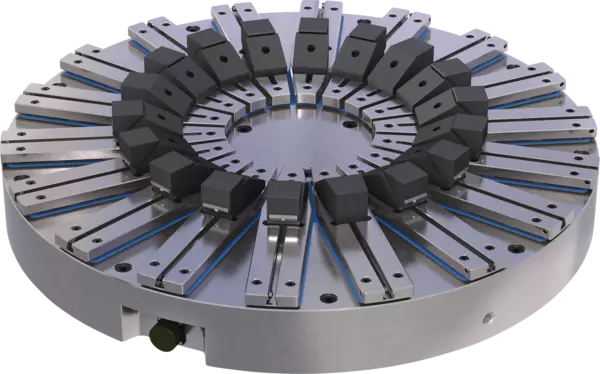
SCHUNK Gripping and Clamping Solutions
SCHUNK develops technologies for industrial gripping, automation, workholding and toolholding applications. Its portfolio includes solutions designed for different workpiece materials, sizes, geometries and production environments.
Rather than relying on a one-size-fits-all approach, manufacturers can evaluate gripping and clamping technologies based on the specific requirements of their process.
Conclusion
Magnetic clamping systems and micro vacuum grippers address different manufacturing challenges. Magnetic solutions can provide secure workholding for suitable ferromagnetic components, while micro vacuum technology can support precise handling of small or delicate parts.
The most effective solution depends on the workpiece, process, environment and automation requirements. By selecting the appropriate technology and integrating it into the broader production workflow, manufacturers can improve handling consistency, reduce manual intervention and support more efficient operations.
SCHUNK’s range of gripping, automation and clamping technologies can help manufacturers develop application-specific solutions for modern industrial production.