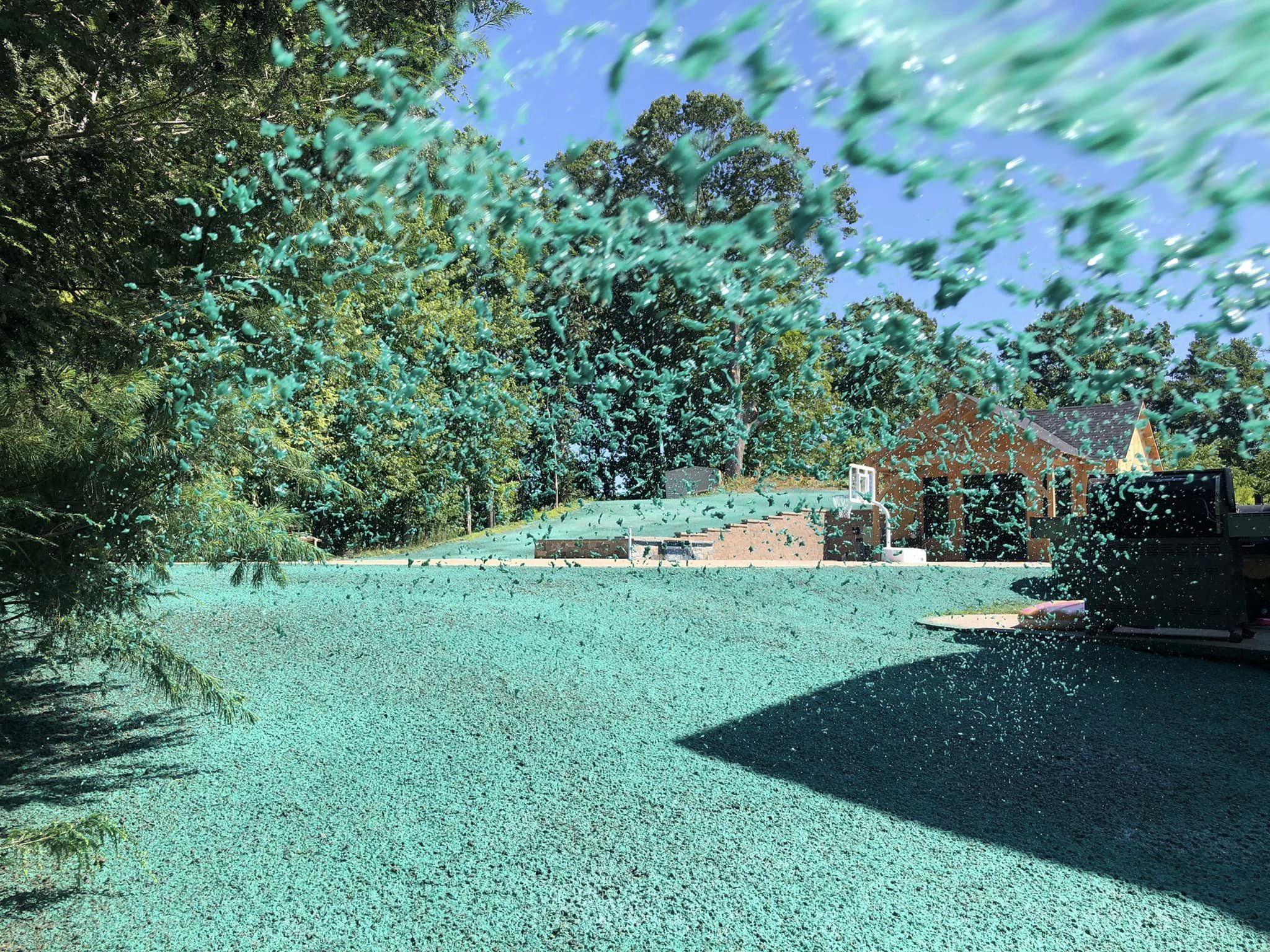
Hydroseeding can be an effective way to establish a new lawn or vegetated area across North Texas, but the watering routine after application is just as important as the hydroseeding process itself. Blackland clay soils present unique challenges because they can hold substantial moisture while also becoming hard and difficult to penetrate when dry. For homeowners, builders, and property managers, understanding how clay responds to irrigation can help protect newly germinated grass. A properly planned Hydroseeding North Texas project should therefore include a watering strategy based on soil condition, grass variety, weather, and site drainage.
Why Blackland Clay Requires a Different Watering Approach
Blackland clay is known for its dense structure and strong moisture-holding capacity, which means water does not always behave the same way it does in sandy soils. When clay becomes saturated, additional irrigation can create runoff instead of moving deeper into the soil. When it becomes extremely dry, the surface can harden and develop cracks, making consistent moisture difficult to maintain. This is why successful hydroseeding requires careful irrigation rather than simply applying large amounts of water at once.
Newly seeded turf has particularly sensitive moisture requirements during the first stages of establishment. Texas A&M AgriLife Extension recommends keeping newly seeded turf moist rather than saturated during the initial growing period because young plants are developing their first roots and shoots. The same guidance notes that the first few weeks are especially important and that watering frequency can be adjusted as the grass matures.
For Hydroseeding North Texas projects, this means the goal should be consistent moisture across the seedbed. The soil should not be allowed to dry completely, but it should not remain continuously waterlogged either. Clay soils can make this balance more difficult because surface moisture may look adequate while infiltration is slow. Regularly checking the soil rather than relying only on a programmed irrigation timer can help identify whether adjustments are needed.
The First 7 to 14 Days After Hydroseeding
The first week after hydroseeding is one of the most important periods for protecting seed and encouraging germination. During this stage, the surface generally needs frequent, light irrigation rather than long watering cycles. The objective is to maintain adequate moisture around the seed without creating standing water or washing mulch and seed downhill. Texas A&M AgriLife specifically advises frequent watering for newly seeded turf and emphasizes keeping the seed and soil moist, not saturated.
A practical starting approach for clay soil is to inspect the surface several times throughout the day, particularly during hot or windy weather. Short irrigation cycles may be necessary when the upper soil begins drying quickly, while cooler or rainy conditions may require less supplemental water. The exact frequency should not be treated as a universal rule because grass type, sunlight, slope, temperature, wind, and irrigation efficiency can all change moisture requirements. A professional hydroseeding company near me should evaluate these conditions when providing aftercare recommendations.
Texas A&M AgriLife also notes that on hot, windy days, newly seeded areas may require several short watering periods rather than one long irrigation cycle. This is particularly relevant for North Texas properties where summer heat can rapidly increase evaporation. Short cycles can give clay soil opportunities to absorb water gradually while reducing the chance of surface runoff. If water begins pooling or flowing across the surface, the irrigation cycle should be shortened rather than simply increasing total water.
A Practical Watering Schedule for Weeks 1 and 2
During the first several days, inspect the seedbed frequently and water whenever the upper surface begins to lose its moisture. Instead of following a rigid number of minutes, focus on what the soil is telling you. Newly applied hydro-mulch may also provide visual clues because significant drying can change its appearance and texture. The objective is to maintain a consistently moist seedbed that supports germination without keeping the clay continuously saturated.
As germination begins, continue using short watering cycles that provide moisture without producing runoff. Clay soils can absorb water slowly, so a long irrigation session may place more water on the surface than the soil can accept at one time. Splitting irrigation into multiple cycles can improve infiltration and reduce waste. Texas A&M resources specifically recognize that clay soils and sloped properties may require slower irrigation or multiple short cycles to prevent runoff.
By approximately the second week, some areas should begin showing developing grass depending on the species and environmental conditions. This is the point when watering practices can gradually begin changing as roots develop. Texas A&M AgriLife notes that after roughly two weeks, seedlings should be growing, although germination time varies by species, and watering amounts and frequency can then be adjusted as plants mature. Avoid making a sudden transition from frequent watering to deep, infrequent irrigation because young roots still require adequate moisture while becoming established.
Weeks 3 to 6: Gradually Encourage Deeper Roots
Once the grass has developed beyond its earliest germination stage, the irrigation objective begins to change. Instead of maintaining only the surface layer continuously moist, the goal becomes supporting deeper root development while allowing the upper surface to dry somewhat between watering cycles. This transition should happen gradually so the young turf does not experience sudden moisture stress. The correct schedule depends heavily on the grass variety and current North Texas weather.
For clay soil, longer watering periods can eventually become useful, but they should be introduced carefully. If the application rate of the sprinkler is faster than the soil can absorb, water may run off before reaching the desired depth. Breaking a longer irrigation session into two or more cycles with a pause between them can allow the first application to soak in before the next one begins. This technique is particularly useful on slopes, compacted areas, and properties with poor infiltration.
A homeowner should periodically check soil moisture instead of assuming that a fixed timer provides the correct amount. Walk the property and inspect areas receiving different amounts of sunlight, especially locations near buildings, fences, trees, and pavement. Shaded areas may retain moisture longer, while exposed sections can dry much faster. A customized irrigation approach can therefore produce more uniform establishment than treating the entire property exactly the same.
Adjusting Watering During North Texas Heat
Summer conditions can make Hydroseeding North Texas considerably more demanding because high temperatures, strong sunlight, and wind can increase moisture loss. Newly established grass is particularly vulnerable because its root system is still developing. During hot weather, irrigation may need to occur more frequently, but increasing the length of every watering cycle is not necessarily the right solution. Clay soil can become saturated near the surface while water continues running off elsewhere.
Morning irrigation is often useful because it allows water to reach the soil before the hottest part of the day. However, the best schedule ultimately depends on current conditions and irrigation-system performance. During unusually hot or windy periods, additional short cycles may be necessary to prevent newly germinated grass from drying out. Texas A&M AgriLife’s turf establishment guidance specifically recognizes that hot, windy days can require several short watering periods.
Property owners should also watch for signs of both under-watering and overwatering. Dry, curling, or declining seedlings can indicate inadequate moisture, while persistent puddling, muddy surfaces, algae-like growth, or runoff can indicate excessive irrigation. These symptoms should be interpreted alongside weather and soil conditions rather than in isolation. A qualified hydroseeding company near me can inspect the site and help determine whether the problem involves watering, drainage, soil preparation, seed selection, or another factor.
How Irrigation Systems Affect Hydroseeding Results
An irrigation system can make post-hydroseeding maintenance easier, but only when it distributes water evenly. Poorly positioned sprinkler heads may leave dry strips while overwatering areas close to the heads. Overlapping spray patterns, clogged nozzles, pressure problems, and incorrect zones can all affect establishment. Before hydroseeding begins, it is worth checking whether the irrigation system can provide reasonably consistent coverage throughout the seeded area.
Large commercial properties require even greater attention to irrigation zones. Texas A&M AgriLife notes that monitoring newly established turf across large landscapes can be challenging because irrigation systems may take significant time to cycle through multiple zones. Commercial properties should therefore have irrigation responsibilities clearly assigned before hydroseeding begins. This is particularly important when several contractors or maintenance teams are involved.
Smart irrigation tools can also help property owners make more informed watering decisions. Texas A&M AgriLife provides the Water My Yard program, which offers customized weekly watering recommendations based on local conditions and grass information. While such tools can provide useful guidance, newly hydroseeded turf may have different short-term needs than an established lawn. The initial establishment period should therefore be managed according to seed and soil conditions rather than simply following an established-lawn schedule.
Common Watering Mistakes to Avoid
One of the most common mistakes is watering too heavily because clay soil appears dry on the surface. A dry-looking surface does not always mean the entire root zone lacks moisture. Applying large quantities of water can produce runoff, especially on slopes or compacted areas. Instead, use shorter irrigation cycles and inspect the soil to determine whether water is actually entering the profile.
Another mistake is allowing the seedbed to dry completely after germination has started. Young seedlings have limited root systems and can decline rapidly when moisture becomes unavailable. Texas A&M AgriLife emphasizes that newly seeded turf should be kept moist during the initial establishment period and warns that young plants can die if allowed to dry out. Consistency is therefore more important than occasional heavy watering during the earliest stage.
Overwatering is equally problematic. Constantly saturated soil can reduce available oxygen around developing roots and may contribute to drainage and turf-health problems. Water should move into the soil without creating prolonged standing water. If irrigation repeatedly causes runoff, pooling, or muddy conditions, the schedule or irrigation application rate should be adjusted rather than simply continuing the same routine.
When to Contact a Hydroseeding Professional
Professional assistance can be particularly valuable when a property contains heavy clay, slopes, compacted construction soil, drainage challenges, or a large area requiring uniform establishment. An experienced hydroseeding contractor can evaluate soil preparation, select appropriate seed mixtures, apply hydro-mulch correctly, and provide recommendations for the early watering period. Texas A&M AgriLife recognizes hydroseeding as an alternative professional method in which seed, fertilizer, and mulch are combined into a slurry and uniformly applied to prepared soil.
When searching for a hydroseeding company near me, property owners should look beyond the lowest installation price. Ask how the contractor handles Blackland clay, what seed varieties are recommended, how the soil will be prepared, and what watering schedule will be provided after application. A reputable contractor should be willing to explain the reasoning behind its recommendations. Experience with similar North Texas properties can be especially valuable because local weather and soil conditions can strongly influence establishment.
For commercial developments, ask whether the contractor can coordinate installation with grading, drainage, irrigation, and construction schedules. The best results usually come from treating hydroseeding as part of the complete site-development process rather than as an isolated final step. Clear expectations about watering, mowing, traffic control, inspections, and potential reseeding can also prevent misunderstandings later. A detailed plan demonstrates professionalism and gives the property owner a practical path toward successful turf establishment.
Building a Long-Term Watering Strategy
Once the new lawn is established, the watering strategy should gradually move away from frequent establishment irrigation. Mature turf generally benefits from irrigation practices designed to encourage healthy roots while avoiding unnecessary water use. The exact schedule varies according to grass species, soil moisture, season, rainfall, and local restrictions. Texas A&M AgriLife emphasizes that irrigation practices should account for plant needs, regional conditions, and efficient water management.
Blackland clay requires continued observation even after establishment. During dry periods, the soil may become hard and develop cracks, while periods of excessive rainfall can leave low areas saturated. Monitoring soil moisture can help determine when supplemental irrigation is actually necessary. Texas A&M AgriLife identifies soil-moisture management as an important part of producing stronger plants while improving irrigation efficiency and conserving water.
A successful Hydroseeding North Texas project does not end when the slurry has been sprayed. Proper soil preparation, appropriate seed selection, consistent early watering, gradual irrigation adjustments, and ongoing turf management all contribute to the final result. Blackland clay may require more careful irrigation management than other soil types, but it can support healthy turf when water is applied thoughtfully. By working with an experienced contractor and responding to actual soil and weather conditions, property owners can give newly hydroseeded grass the foundation it needs for long-term establishment.