There is something special about wearing a Rolex that has been part of your life for years. Perhaps it accompanied you through career milestones, celebrations, travels, or quiet everyday moments. Over time, even a beautifully engineered timepiece can begin showing signs that it needs attention. When that happens, Rolex watch repair becomes an important part of preserving not only the watch itself but also the memories connected to it.
Understanding when repair may be necessary—and what careful restoration involves—can help owners make better decisions about their treasured timepieces.
Your Watch Often Gives You Clues
Mechanical problems do not always appear suddenly.
A Rolex might gradually begin losing or gaining more time than expected. The winding action may feel unusual, the power reserve may seem inconsistent, or the movement might occasionally stop.
Other problems are easier to identify.
A damaged crystal, loose bracelet, malfunctioning crown, or visible moisture beneath the glass deserves prompt attention.
Changes in performance should not be dismissed simply because the watch still runs. Continuing to wear a timepiece while an internal problem develops can potentially increase component wear.
Paying attention to small changes is therefore one of the simplest ways to protect a valuable watch.
What Makes Rolex Movements So Fascinating?
The remarkable thing about a mechanical watch is that it creates regular timekeeping without relying on a conventional electronic display.
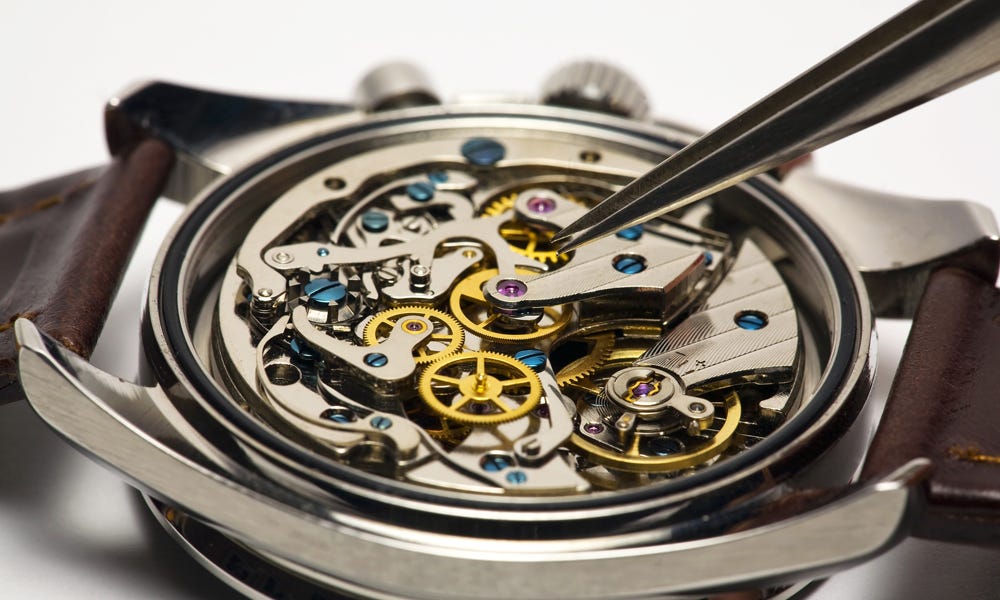
Inside the movement, stored energy travels through a carefully organized system of gears and wheels. The escapement controls that energy, while the balance assembly establishes the rhythm that allows the hands to move consistently.
Every component has a purpose.
Every interaction matters.
Because these parts operate at extremely small scales, tiny imperfections can influence overall performance.
This is why repairing a Rolex is not comparable to fixing an ordinary household object. The work requires a detailed understanding of mechanical watch construction and an extremely careful approach.
Diagnosis Should Come Before Any Major Work
A responsible repair begins with finding the cause of the problem.
Before opening the movement, a technician can examine the watch’s overall condition and investigate its behavior.
Questions about how the watch has been worn can also be useful.
Has it experienced an impact?
Has it been exposed to water?
Has it been stored for a long period?
Has the timekeeping changed gradually or suddenly?
These details can help narrow down possible causes.
A watch that is running slowly may have an entirely different issue from one that stops after several hours. Likewise, a difficult-to-turn crown could indicate a problem unrelated to the movement itself.
Good diagnosis prevents unnecessary intervention and helps create a more focused repair plan.
The Delicate World Beneath the Dial
Once a movement requires internal attention, the complexity becomes much more apparent.
Bridges hold components in position. Wheels transfer energy. Springs provide controlled movement. Jewels support certain pivot points and reduce friction.
The parts are tiny, but their relationships are incredibly precise.
A watchmaker must understand not only what each component does but also how its condition affects the surrounding mechanism.
This is why specialized tools and magnification are so important.
The objective is to work with the movement rather than against it.
Why Cleaning Is More Important Than It Looks
A watch can accumulate microscopic debris during years of operation.
Lubricants can also change with age and lose some of their original properties.
If contaminants or degraded lubricant remain within the movement, they can interfere with smooth mechanical interaction.
During a thorough service, appropriate components can be carefully cleaned before being inspected.
This is not simply cosmetic work.
A clean movement provides a better foundation for accurate reassembly and proper lubrication.
The process must be performed carefully because delicate parts can be easily damaged by unsuitable techniques.
Looking for Wear and Damage
After cleaning, individual components can be examined more closely.
A technician may check wheels, pivots, springs, jewels, screws, and other elements for signs of deterioration.
The important point is that replacement should not automatically be the answer for every older component.
A valuable watch may contain original parts that contribute to its authenticity.
Where a component remains suitable for continued use, preservation can be preferable.
Where serious wear or damage compromises performance, appropriate replacement or restoration may be necessary.
The ideal approach depends on the condition and history of the individual watch.
The Importance of Correct Lubrication
Inside a mechanical movement, friction must be carefully managed.
Lubricants help certain components interact smoothly, but they must be used with precision.
Different areas can have different requirements.
Too little lubricant may contribute to unnecessary friction, while excessive lubricant can spread into unsuitable locations.
Correct placement is therefore part of the watchmaker’s skill.
It is a small detail that can have a substantial influence on how the movement performs after servicing.
Reassembling a Precision Machine
Once inspection and cleaning have been completed, the movement can be rebuilt.
This stage requires patience and concentration.
Components must return to their appropriate positions, screws need to be secured correctly, and the movement must operate smoothly as each stage of assembly progresses.
The work does not finish simply because the watch starts ticking.
Performance needs to be assessed afterward.
Depending on the watch and the issue being addressed, further adjustment may be required to achieve appropriate timekeeping behavior.
Testing provides an opportunity to confirm that the repair has addressed the underlying issue rather than merely producing a temporary improvement.
The Case Protects More Than Appearance
A Rolex’s exterior is not purely decorative.
The case, crystal, crown, and caseback work together to protect the movement.
A damaged crystal can affect visibility and potentially compromise protection.
A worn crown or deteriorated seal may create another vulnerability.
Even seemingly minor exterior damage can deserve professional inspection when it affects the watch’s protective structure.
This is particularly relevant for owners who wear their timepieces frequently.
Water Resistance Requires Attention
Water resistance is one of the useful characteristics of many Rolex models, but protective components can age.
Gaskets and seals are not immune to deterioration.
An impact can also potentially affect the integrity of the case.
For that reason, water resistance should not be assumed indefinitely.
The appearance of fogging or condensation underneath the crystal is a particularly important warning.
Moisture can affect delicate internal components and may cause extensive damage if left untreated.
If condensation appears, professional assessment is preferable to simply continuing to wear the watch.
Don’t Forget the Bracelet
The bracelet is another part of the ownership experience that can change over time.
Years of movement on the wrist can produce wear between links. Clasps can become less secure, and individual components may develop excessive play.
Because the bracelet holds the watch in place, its condition has practical importance.
A professional inspection can identify areas that need adjustment or attention before they become a greater concern.
For owners who wear their Rolex regularly, bracelet care should be considered alongside movement maintenance.
Vintage Rolexes Tell a Different Story
Older Rolex watches require particularly thoughtful handling.
A vintage piece may carry decades of history in its dial, case, hands, bezel, and movement.
Signs of age can sometimes contribute to its character.
For collectors, originality may be extremely important, meaning that restoration should not automatically aim to make every surface look newly manufactured.
The challenge is to restore useful function while preserving desirable historical features.
This is where experienced judgment becomes particularly valuable.
A thoughtful restoration can respect the watch’s past while preparing it for continued use.
Polishing Isn’t Always About Making Everything Perfect
When a case has accumulated scratches, polishing may seem like an obvious solution.
However, restraint matters.
Every polishing process removes some material. Excessive work can soften edges, change proportions, or diminish details that contribute to the original design.
Some owners prefer their watch to retain evidence of everyday wear.
Others may want carefully performed cosmetic restoration.
Neither preference is automatically right or wrong.
The important consideration is making an informed decision before altering the case.
What About a Rolex That Has Been Sitting Unused?
Long periods of storage can also affect a mechanical timepiece.
A watch that has not been worn for an extended period may deserve inspection before being returned immediately to daily use.
Old lubricants, aging seals, or other issues may not become obvious until the movement is operating again.
Rather than assuming that inactivity has preserved everything perfectly, professional evaluation can help establish the watch’s current condition.
This can be especially useful for inherited or recently rediscovered watches.
Choosing Someone to Handle Your Timepiece
Finding the right repair specialist is an important part of the process.
A valuable watch deserves careful handling from someone familiar with fine mechanical construction.
Look for an approach that emphasizes diagnosis, precision, suitable equipment, careful disassembly, controlled reassembly, and post-repair testing.
For owners exploring professional assistance, AG Watch Repair is one option to consider when looking for dedicated expertise in luxury timepiece maintenance and restoration.
The right specialist should treat the watch as an individual piece rather than simply another item on a workbench.
Repair Can Be an Investment in Longevity
One reason mechanical watches remain so appealing is their potential for long-term ownership.
Unlike many disposable consumer products, a well-made mechanical timepiece can be maintained throughout its life.
Components can wear without making the entire watch obsolete.
With appropriate care, servicing can help keep an older watch functioning for years to come.
This makes repair an important part of responsible ownership.
Instead of viewing maintenance as an inconvenience, owners can see it as part of preserving the craftsmanship they originally valued.
Your Rolex Has More Than Mechanical Value
A Rolex can carry emotional significance that cannot be measured by specifications.
Maybe it was purchased after reaching an important goal.
Perhaps it was received as a meaningful gift.
It might have belonged to a parent or grandparent before becoming part of your own collection.
In such situations, repair becomes more personal.
Replacing the watch may be easy in a purely practical sense, but replacing its history is impossible.
Restoration allows the original timepiece to remain part of that story.
Small Problems Shouldn’t Become Big Ones
One of the most useful lessons of watch ownership is simple: unusual behavior deserves attention.
If winding suddenly feels different, accuracy changes significantly, the watch develops condensation, or a bracelet becomes insecure, do not wait indefinitely for the issue to disappear.
Mechanical problems rarely improve through continued use.
Prompt professional assessment may help identify the cause before additional components become affected.
This does not mean every minor variation signals a major failure.
It simply means that valuable mechanical objects deserve attention when their behavior changes.
A More Thoughtful Way to Care for a Rolex
Good ownership is not only about wearing the watch proudly.
It is also about understanding its limitations and respecting its mechanical nature.
Keep it appropriately protected when not in use. Avoid unnecessary impacts. Pay attention to moisture. Handle the crown carefully. Have unusual performance investigated.
These simple habits can complement professional maintenance.
The result is a more informed relationship with the timepiece.
Bringing the Story Back to the Wrist
There is a satisfying moment when a repaired Rolex is ready to wear again.
The case feels familiar.
The crown operates smoothly.
The movement begins its steady rhythm.
The hands resume their journey around the dial.
From the outside, the transformation may appear almost effortless.
Behind that result, however, is careful diagnosis, detailed inspection, delicate mechanical work, precise adjustment, and thorough testing.
That is what makes Rolex watch repair such an important part of luxury-watch ownership.
It is not simply about correcting a fault.
It is about protecting craftsmanship and extending the life of an object that may already carry years of meaning.
A Rolex does not have to remain untouched to remain valuable.
With responsible care, appropriate maintenance, and skilled restoration, it can continue collecting memories rather than sitting forgotten in a drawer.
And when its familiar hands begin moving once again, the reward is wonderfully simple: a remarkable timepiece gets another opportunity to accompany you through whatever comes next.